

Weekday vs. Weekend Service Key Takeaways
Running a restaurant, bar, or hospitality venue means delivering the same excellent experience whether it’s a packed Saturday or a sleepy Tuesday.
- Weekday vs. Weekend Service requires distinct staffing, prep, and pacing strategies to maintain quality across volume extremes.
- Consistency checks for busy nights reduce error rates by up to 30% and improve guest retention significantly.
- Quiet nights are prime opportunities for training, deep cleaning, and refining systems that pay off on packed weekends.
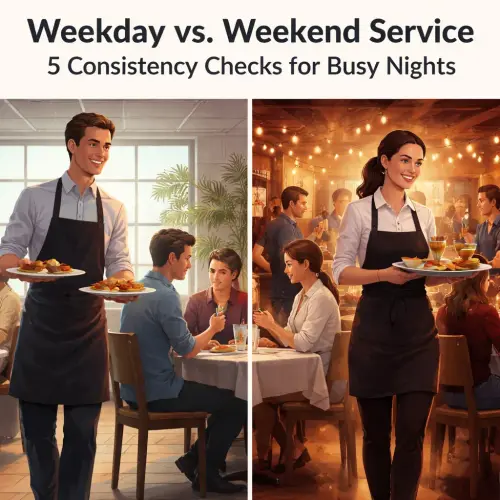
Why Weekday vs. Weekend Service Consistency Matters
The difference between a Tuesday dinner rush and a Saturday evening surge isn’t just about customer count—it’s about mindset, preparation, and execution. Many venues accidentally lower their standards on quiet nights, assuming guests expect less, while on busy nights they rush and cut corners. Neither approach builds the kind of reputation that earns repeat visits and strong reviews.
Consistency across both extremes builds trust. Guests who love your Friday night energy should feel just as welcomed on a Wednesday date night. Your team, meanwhile, benefits from clear expectations that don’t change based on the day of the week. The following five checks will help you lock in that reliability.
1. Staffing Ratios and Skill Placement for Busy Nights vs. Slow Shifts
One of the biggest mistakes operators make is using the same staffing formula every day of the week. Weekday vs. Weekend Service demands different headcounts and different skill assignments. On a Friday night, you need your fastest expo and your most charismatic front-of-house lead. On a Tuesday, you may need fewer people but with stronger cross-training so that each team member can cover multiple roles. For a related guide, see 5 Key Differences Between Lunch vs. Dinner Service – Avoid Costly Mistakes.
Right-Sizing Your Team
Calculate your average covers per hour for each day of the week, then schedule accordingly. A Sunday brunch might need three servers for 60 covers, while a Tuesday lunch may need only one for 20 covers. But don’t just count bodies—place your strongest leaders on the highest-pressure shifts. That means your best bartender works Friday and Saturday, not Monday.
Cross-Training for Flexibility
On quiet nights, team members should rotate through stations they don’t normally handle. This builds depth and ensures that when someone calls in sick on a busy night, the replacement knows the flow. A well-trained host can run food; a line cook can support expo. Flexibility prevents inconsistency.
2. Pre-Shift Briefings That Adapt to the Night’s Tempo
A single, generic pre-shift meeting doesn’t serve both a 40-cover Wednesday and a 200-cover Saturday. Tailor your briefings to the energy and challenges of that specific shift. This is a core element of weekend service consistency that many venues overlook.
What to Cover on Busy Nights
Focus on speed, communication, and bottlenecks. Review the 86’d items, confirm the reservation list, and remind everyone about timing expectations. Set a clear rallying cry—for example, “Clear and reset tables in under three minutes.”
What to Cover on Quiet Nights
Use low-volume shifts for deeper work: menu memorization quizzes, wine education, new cocktail specs, or service standard refreshers. This is when your team can slow down enough to truly absorb details that get missed during a rush. It directly improves Weekday vs. Weekend Service quality because the knowledge carries over.
3. Kitchen Prep and Par Levels Across Weekday vs Weekend Service
Nothing destroys consistency faster than running out of a key ingredient on a Friday night—or watching it spoil on a Monday because you over-ordered. Setting dynamic par levels based on historical data is essential for balancing busy nights and quiet nights.
Dynamic Par Levels by Day
Instead of one par for the whole week, create a weekend par and a weekday par. For example, your Saturday ground beef par might be 40 pounds, while Tuesday’s is 15. Adjust your ordering schedule so that the highest pars arrive Thursday or Friday morning, and smaller deliveries arrive Monday.
Cross-Utilization of Ingredients
Design your menu so that ingredients serve multiple dishes across the week. A braised short rib special on a slow Monday can use the same base as a weekend burger special. This reduces waste and keeps your inventory nimble. It also ensures that weekend service consistency isn’t compromised by shortages.
4. Service Pace and Guest Communication Protocols
The speed of service naturally shifts between busy nights and quiet nights, but the feeling of being taken care of should remain constant. Train your team to read the room and adjust their language and pacing accordingly.
Busy Night Pacing
Your team should be trained to pre-bus aggressively, greet tables within 60 seconds, and check in at natural pause points. Use clear codes for “running behind” or “ready to fire” so the back-of-house stays in sync. Even during a rush, never skip the warm welcome and genuine thank you.
Quiet Night Pacing
On slower nights, servers can linger longer at tables, offering dessert recommendations or sharing stories about the menu. Guests appreciate this extra attention. However, never let a server disappear for 15 minutes because they’re bored. Set a minimum touchpoint standard regardless of volume. For a related guide, see Worst Surprise Tasting Menu Mistake: Avoid This Fine Dining Disaster.
5. Post-Shift Reviews and Continuous Improvement
The final consistency check is what happens after the doors close. Weekday vs. Weekend Service improvements come from honest post-shift debriefs that capture what worked and what didn’t.
Busy Night Debrief
Keep it quick: What was the biggest bottleneck? Did we run out of anything? Which server handled the rush best? Capture these notes in a shared log—digital or paper—so patterns emerge over time.
Quiet Night Debrief
Use slower shifts to dig deeper. Review guest feedback from the previous weekend. Practice a new service sequence. Test a new drink or dish. The goal is to treat quiet nights as the laboratory for improving weekend service consistency.
| Consistency Check | Busy Night Focus | Quiet Night Focus |
|---|---|---|
| Staffing Ratios | Strength in numbers, best leaders on floor | Cross-training, fewer but more flexible team members |
| Pre-Shift Briefings | Speed, bottlenecks, reservation details | Menu education, service drills, skill practice |
| Kitchen Prep Levels | High pars, early deliveries, backup stock | Smaller pars, waste reduction, prep for upcoming rush |
| Service Pace | Fast but warm, pre-busing, quick check-ins | Slower, more personalized, longer table engagement |
| Post-Shift Review | Quick wins, bottlenecks, highs and lows | Deep training, feedback review, process improvement |
Useful Resources
To deepen your approach to Weekday vs. Weekend Service consistency, explore these industry resources:
- Restaurant Hospitality: Keeping Service Consistent on Busy and Slow Nights — Practical strategies from industry operators.
- Toast Blog: 5 Tips for Consistent Restaurant Service Every Shift — Data-backed advice on staffing, prep, and guest experience.
Frequently Asked Questions About Weekday vs. Weekend Service
How do you maintain service quality on both busy and quiet nights ?
Implement distinct but aligned protocols for each volume level, focusing on staffing, pre-shift communication, kitchen prep, service pace, and post-shift review. The key is to set the same standard of care while adapting execution to the pace.
What is the biggest challenge in weekday vs weekend service consistency ?
The biggest challenge is mindset: teams often treat slow shifts as downtime and busy shifts as chaos. Consistency breaks down when standards change based on perceived guest expectations. Training and systems are the fix.
How should staffing differ between weekdays and weekends?
Weekends require more total staff with a higher ratio of experienced leaders on the floor. Weekdays can operate with fewer people but with a higher demand for cross-training so each person covers multiple roles effectively.
What is a pre-shift briefing and why does it matter for consistency?
A pre-shift briefing is a 10-15 minute meeting before service to align the team on menu changes, service flow, and guest priorities. Tailoring it to the night’s tempo ensures that everyone knows the plan before the first guest arrives.
How do you set par levels for busy vs quiet nights ?
Use historical sales data to create separate par levels for weekdays and weekends. Order higher volumes with earlier delivery windows for busy nights, and smaller, more frequent orders for quiet nights to reduce waste.
Can quiet nights be used for training without hurting service?
Absolutely. Low-volume shifts are ideal for menu quizzes, wine education, role-playing difficult guest scenarios, and practicing new techniques. Guests appreciate the extra attention while your team sharpens skills.
What should a post-shift review include on a busy night?
Keep it quick: identify the biggest bottleneck, one thing that went great, one thing to improve, and any inventory issues. Record these in a shared log so patterns become visible over weeks.
How do you keep service pace consistent without rushing guests?
Train servers to read table cues: pre-bus quickly, greet within a minute, and check in at natural pauses. On busy nights, speed is about efficiency; on quiet nights, it’s about attentiveness. The standard of care stays the same.
What is cross-utilization and how does it help consistency?
Cross-utilization means designing dishes that share ingredients, so you need fewer unique items on hand. This simplifies prep, reduces waste, and ensures you can deliver a consistent menu across all shifts.
Why do some venues struggle with weekend service consistency ?
Struggles often come from understaffing during rushes, poor communication between front and back of house, and failing to adapt prep levels to demand. Without systems, volume overwhelms quality.
How do you train staff to handle both fast and slow shifts?
Use role-playing during pre-shifts, shadow shifts with experienced mentors, and regular feedback sessions. The goal is to build muscle memory for high-pressure moments and genuine connection for quieter times.
What role does the manager play in consistency?
Managers set the tone by being present, running effective pre-shifts, monitoring service flow, and leading post-shift reviews. They enforce standards without micromanaging, empowering the team to make smart adjustments.
Should menu specials differ on weekdays vs weekends?
Yes, but with intention. Use weekend specials to showcase premium ingredients and high-velocity items. Use weekday specials to move surplus stock and test new dishes. Both should meet the same quality and presentation standards.
How do you measure service consistency over time?
Track guest satisfaction scores, online review mentions of consistency, table turn times, and staff turnover. Look for correlations between peak volume days and dips in satisfaction. Adjust systems accordingly.
What is the biggest risk of treating quiet nights as unimportant?
The risk is that standards slip across the board. If your team learns they can be lazy on Tuesday, they may unconsciously carry that attitude into Friday. Consistency requires equal rigor every shift.
How do you handle a sudden shift from quiet to busy on a weekday?
Have a surge plan: a clear signal for the team to switch into high gear, a grab-and-go prep list, and a well-documented playbook for table management. Cross-training ensures everyone can pivot.
Should you schedule the same servers on weekdays and weekends?
Ideally, yes—for continuity. But rotate intentionally so that everyone experiences both slow and fast shifts. This builds empathy across the team and ensures everyone understands both sides of the operation.
How do you keep kitchen staff motivated on quiet nights ?
Use quiet nights for deep cleaning, prep for the weekend, R and D on new menu items, and skill-building exercises. Give them ownership of a project, like perfecting a new sauce or reorganizing the walk-in.
What is the most overlooked element of weekend service consistency ?
Communication handoffs between front of house and back of house, especially during the rush. Clear, calm communication prevents misfires and keeps the team in sync. Brief, standard call-outs make a huge difference.
How long does it take to see improvement from these consistency checks?
Most venues see noticeable improvement within two to four weeks of consistent implementation. The key is to choose one or two checks to focus on first, build the habit, then layer on more.