
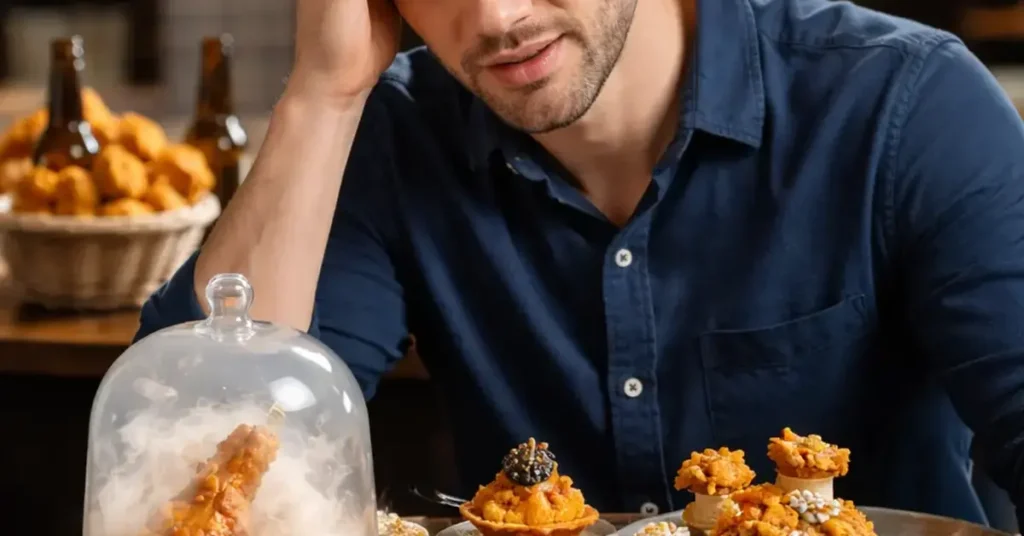
worst fine dining experience Key Takeaways
Ordering a surprise tasting menu at a restaurant that also sells fried chicken is a recipe for disaster.
- Never assume a restaurant can execute a surprise tasting menu just because it offers one — the menu must align with the kitchen’s core expertise.
- A surprise tasting menu from a fried chicken restaurant often lacks the technical precision, sourcing strategy, and pacing that define true fine dining.
- Always read recent reviews and ask about the chef’s background before committing to a blind tasting journey.
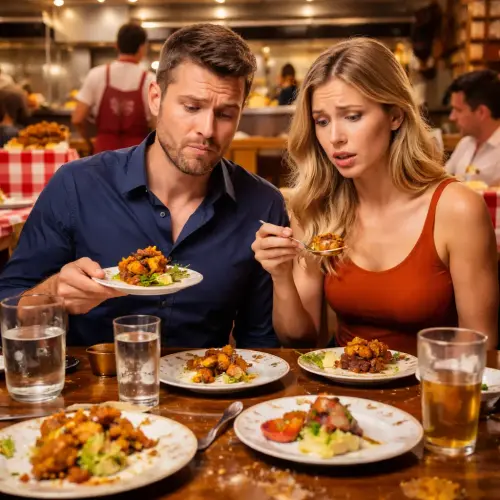
What Makes a Surprise Tasting Menu So Risky at a Fried Chicken Restaurant?
Let me set the scene. A friend and I walked into what looked like a charming neighborhood spot — exposed brick, dim lighting, a chalkboard listing craft cocktails. The menu had two sections: “Buttermilk Fried Chicken” and “Chef’s Surprise Tasting Menu.” We thought, “How bad could it be? They’re confident enough to offer both.”
That was my first mistake. A restaurant that excels at crunchy, juicy fried chicken rarely has the brigade system, the precise temperature control, or the multi-course pacing required for a high-end tasting menu. What followed was a parade of poorly conceived dishes that made me question every life choice that led me to that table.
The Reality Gap Between Comfort Food and Fine Dining
When you order a bucket of fried chicken, you expect comfort: hot, salty, greasy bliss. A tasting menu, by contrast, demands progression — from amuse-bouche to palate cleanser to protein with sauce to cheese course. The kitchen at this restaurant clearly hadn’t been trained in that rhythm. Our first course was a lukewarm lobster bisque that tasted like it had been sitting in a bain-marie since lunch service. The soup was gritty, and the garnish — a single chive — looked like an afterthought. For a related guide, see Service Flow and Timing: 5 Proven Strategies for Better Course Pacing.
How the Fried Chicken DNA Contaminated the Tasting Experience
Course after course, the same problem emerged: the kitchen couldn’t escape its comfort zone. A “deconstructed” chicken pot pie arrived as a puff pastry square topped with glazed carrots, but the chicken was overcooked and the sauce was identical to the gravy used on the fried chicken platter. The wine pairings were equally confused — a buttery Chardonnay served with a dish that cried out for a dry Riesling. Every bite reminded me that the surprise tasting menu at a fried chicken restaurant was never designed by someone who understood fine dining.
How to Identify a Fine Dining Disaster Before You Order
After that traumatic meal — which, on top of everything, cost $85 per person — I developed a checklist to avoid repeating history. If you ever encounter a restaurant that offers both fried chicken and a tasting menu, use these criteria before you commit.
| Red Flag | Why It Matters | What to Ask Instead |
|---|---|---|
| One chef cooks both menus | Great fried chicken technique rarely transfers to delicate sauces, sous-vide proteins, or artistic plating. | “Does the tasting menu have a dedicated chef de partie?” |
| No separate tasting menu kitchen pass | In fine dining, the expo team times courses precisely; at a casual spot, your table may wait 40 minutes between courses. | “How long does the full tasting experience take?” |
| Reviews mention “fried chicken” far more than “tasting menu” | Popularity of the comfort food signals where the kitchen’s true talent lies. | “Can I see photos of recent tasting menu dishes?” |
| Pricing is too low for a multi-course menu | A proper tasting menu with quality ingredients and labor costs $100+; a $50 version usually cuts corners. | “What’s the sourcing story for the proteins and produce?” |
The Lesson I Learned About Expectations and Experience
As the final course — a chocolate mousse that tasted more like instant pudding — landed in front of me, I realized the real problem wasn’t the food. It was my expectation. I wanted an elegant, thoughtful journey, but the restaurant never claimed to be a fine dining establishment. It was a fried chicken joint that added a tasting menu as a gimmick to attract premium customers on date nights. The mismatch between my hopes and the kitchen’s reality created my worst fine dining experience ever.
The Surprising Takeaway: Trust the Restaurant’s Identity
That night taught me to respect a restaurant’s core identity. If a place is famous for its buttermilk-fried chicken, order the chicken. Don’t ask the short-order cook to become a Michelin-starred chef simply because the option exists on the printed menu. The best meals come from restaurants that stay in their lane — and the best diners know how to choose accordingly.
6 Warning Signs Your “Fine Dining” Experience Will Go Wrong
You don’t need to live through a disaster to recognize one brewing. Here’s a quick checklist to scan before you book a surprise tasting menu anywhere:
- Check the chef’s background. Do they have fine dining training, or is their resume mostly casual concepts?
- Read the tasting menu description. If it uses generic phrases like “seasonal vegetables” or “house-made pasta” without specifics, the kitchen may be hedging.
- Look at the restaurant’s photography. Are the tasting plates artfully composed, or do they look like standard entrees on smaller plates?
- Ask about course count and pacing. A real tasting menu should have 7–12 distinct courses, not 4 stretched-out dishes.
- Verify wine or beverage pairings. If they don’t offer a pairing option, the menu may not have been designed with beverage synergy in mind.
- Check recent Yelp or Google reviews. Search for “tasting menu” specifically and scan for complaints about portion size, temperature, or wait times.
How to Salvage a Bad Tasting Menu Night
If you’re already seated and realize the worst fine dining experience is unfolding before you, remember: you have options. First, speak up politely. If a dish is cold or overcooked, tell your server. Good restaurants want to fix mistakes. Second, skip the wine pairing if you suspect the pours are uninspired — order a bottle you know you’ll enjoy. Third, if the meal is truly inedible, ask to speak with the manager. You don’t have to be rude, but you shouldn’t suffer in silence. A professional operation will offer to comp a course or modify the remaining dishes.
A Final Caution Against “Gimmick” Tasting Menus
Since that night, I’ve heard dozens of similar stories from food-loving friends: the sushi bar that tried to pass off California rolls as omakase, the Italian trattoria that offered a “truffle tasting” with truffle oil instead of real truffles. The common thread is always the same — a restaurant that tries to be everything to everyone ends up serving no one well. So the next time you see a surprise tasting menu on a menu next to fried chicken, take a breath, order the chicken, and save the tasting adventure for a place that lives and breathes fine dining.
Useful Resources
For more on what defines a true fine dining tasting menu and how to spot the real deal, check out these trusted guides:
- Fine Dining Lovers: What Is a Tasting Menu? — A clear breakdown of tasting menu etiquette, course structure, and what to expect from a quality experience.
- Chef’s Pencil: Interviews with Professional Chefs — Read first-hand accounts from chefs who share the difference between gimmick tasting menus and the real art of multi-course dining.
Frequently Asked Questions About worst fine dining experience
What should I do if I’m already seated and realize the tasting menu might be bad?
Speak up politely. If a dish arrives cold or poorly prepared, tell your server immediately. Reputable restaurants want to correct mistakes and will often offer a replacement or comp a course.
How can I tell if a surprise tasting menu is worth the price?
Read recent online reviews specifically mentioning the tasting menu, ask about the chef’s background, and confirm the number of courses and estimated duration. If the menu description is vague, that’s a red flag. You can also browse more posts in reviews.
Is it ever okay to order a tasting menu at a casual restaurant?
Only if the restaurant has a dedicated fine dining section in the kitchen and the chef has proven experience with multi-course techniques. Otherwise, you’re paying extra for a gimmick.
What’s the difference between a tasting menu and a prix fixe menu?
A tasting menu typically has 7–12 small courses with wine pairings, emphasizing progression and surprise. A prix fixe menu usually offers 3–4 fixed courses with limited choices, often at a set price.
Can a restaurant that serves fried chicken also do a good tasting menu?
It’s possible but rare. The kitchen needs separate stations, training, and ingredient sourcing. Most casual places don’t have the capacity to execute both well simultaneously.
How much should a proper tasting menu cost?
Expect to pay between $100 and $250 per person for a 7–12 course menu at a reputable fine dining restaurant, excluding wine pairings. Significantly less often means lower quality ingredients or shortcuts.
What questions should I ask before booking a surprise tasting menu ?
Ask: “How many courses are included? Does the chef have fine dining training? Can I see photos of recent courses? How long does the experience last? Is there a wine pairing option?”
Should I trust a restaurant that offers both a la carte and tasting menu?
Not automatically. If the a la carte menu is the main draw, the tasting menu may be an afterthought. Look for a separate tasting menu description that shows the kitchen’s unique creativity.
What are common signs of a gimmick tasting menu?
Vague menu language, no wine pairing, low price, limited course count (4–5 courses), and online reviews that focus on the regular menu rather than the tasting experience.
Can I ask the restaurant to customize the tasting menu due to dietary restrictions?
Yes, most fine dining restaurants accommodate allergies or preferences if you inform them at booking. If they refuse, that’s another red flag about their kitchen’s flexibility.
What if I don’t like a course in the tasting menu — can I skip it?
You can politely decline a course, but the kitchen has often already prepared it. It’s better to tell your server about any dislikes in advance so they can adjust or swap courses.
How long does a typical tasting menu dinner last?
Plan for 2.5 to 4 hours depending on the number of courses and the restaurant’s pacing. Ask ahead so you can budget your evening.
Is a tasting menu more expensive than ordering a la carte?
Usually yes, because you’re paying for the labor, ingredients, and creativity of many small dishes. However, some tasting menus offer value if you want to try a wide range of the chef’s work.
What wine pairing styles work best with a surprise tasting menu ?
Classic pairings match each course individually. Modern pairings might include sake, cider, or non-alcoholic options. Ask if the sommelier designs pairings specifically for the menu.
Can I request a tasting menu at a restaurant that doesn’t normally offer one?
It’s not recommended. Without a set menu, the kitchen may not have the ingredients or time to create a cohesive multi-course experience. Stick to what they do best.
How do I find the best surprise tasting menus in a new city?
Search food blogs, local review sites, and Instagram for hashtags like #tastingmenu and check if the chef has won awards or worked at Michelin-starred restaurants.
What should I wear to a tasting menu dinner?
Most fine dining tasting menu experiences require smart casual to formal attire. Check the restaurant’s dress code when booking to avoid feeling under- or overdressed.
Is it rude to take photos of tasting menu dishes?
As long as you’re discreet and don’t use flash, most restaurants allow photos. Avoid holding up service for other diners, and never photograph other guests without permission.
What if the tasting menu I ordered is served all at once?
A true tasting menu is served course by course. If all dishes arrive simultaneously, the kitchen either doesn’t understand pacing or didn’t have time to prepare properly. Send it back respectfully.
How can I share my feedback after a disappointing tasting menu experience?
Speak to the manager in person first. Later, write a balanced online review that describes what went wrong without being vindictive. Your honest feedback helps other diners — and the restaurant — improve.