
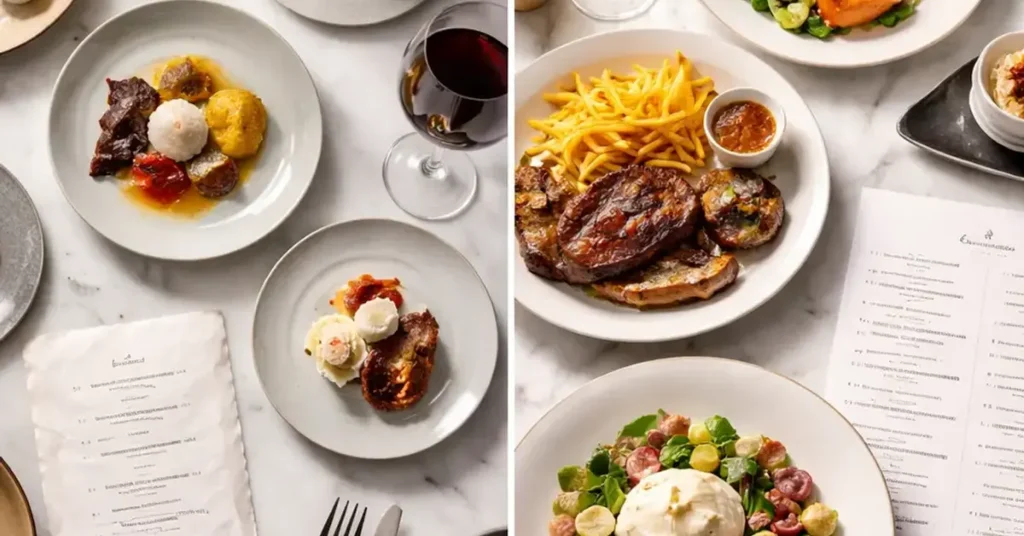
tasting menu vs à la carte Key Takeaways
The choice between a curated tasting menu and a free-form à la carte experience is more than a logistical decision — it’s a philosophical one.
- A tasting menu is a fixed narrative arc, while à la carte empowers personal storytelling.
- Course descriptions on a tasting menu build a journey; à la carte descriptions must stand alone with compelling detail.
- The best restaurants blend both approaches to create a memorable dining experience narrative .
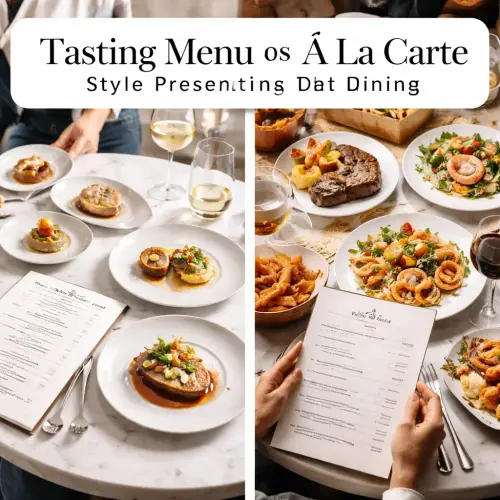
Why the tasting menu vs à la carte Question Matters for Restaurants
Every diner has been there: staring at a menu, debating whether to trust the chef’s vision or build their own adventure. This isn’t just about food preferences — it’s about control, surprise, and the story we want to tell ourselves about the evening. The menu philosophy behind each format directly impacts how guests perceive value, creativity, and the overall experience. For a related guide, see 7 Proven Starter Mistakes: Texture, Temperature and Seasoning Tips.
For chefs, the choice between a tasting menu and an à la carte offering shapes everything from kitchen workflow to ingredient sourcing. But for diners, the real difference lies in how the meal unfolds as a story.
The Narrative Power of a Tasting Menu
When you commit to a tasting menu, you surrender to a predetermined arc. The chef becomes the author, and each course is a chapter. Storytelling through course descriptions here is critical — every line must hint at what’s to come and build anticipation. A well-written tasting menu creates dramatic tension: a light, delicate course sets the stage, a rich, bold centerpiece offers conflict, and a thoughtful mignardise brings resolution.
The Freedom of À La Carte Dining
À la carte dining, by contrast, puts the reader in control. The guest is the editor, selecting chapters at will. This doesn’t reduce the need for storytelling — it elevates it. Each dish description must be a compelling short story, able to stand alone while also hinting at the chef’s broader dining experience narrative. The risk here is a disjointed meal; the reward is a deeply personal journey.
5 Key Storytelling Differences Between Tasting and À La Carte Menus
1. Narrative Arc vs. Anthology
A tasting menu follows a classical narrative structure: introduction, rising action, climax, and denouement. The chef guides the diner through a carefully paced emotional and flavor journey. An à la carte menu, however, reads like an anthology — each dish is a complete story, and the diner chooses the order and combination. This fundamental difference in storytelling through course descriptions changes how every word is written.
2. Pacing and Timing of Descriptions
On a tasting menu, descriptions can build on each other. A chef might write “A palate cleanser after the richness of the foie gras” — directly referencing the previous course. À la carte descriptions must be self-contained, offering enough detail without relying on context. This makes concise, evocative language even more important in an à la carte format.
3. Emotional Investment Per Course
When a diner pays for a single dish, they expect a complete emotional payoff in that moment. The description must deliver that promise immediately. For a tasting menu, the emotional arc spans the entire meal. A course that is merely “good” becomes part of a greater whole, while a disappointing dish in an à la carte setting stands out as a failure.
4. The Role of Surprise vs. Transparency
Tasting menus thrive on surprise. Chefs often leave descriptions deliberately vague, inviting trust. “A study in textures” or “From the sea to the fire” creates mystery. À la carte menus, however, require transparency. Diners need to know exactly what they are ordering, down to key ingredients and preparation methods, because they are making a choice with their money.
5. Personalization of the Narrative
The ultimate difference lies in who controls the story. In a tasting menu, the chef is the sole storyteller. In an à la carte meal, the diner becomes a co-author, crafting a personal dining experience narrative from available chapters. Some restaurants are blending these philosophies with “choose your own adventure” tasting menus or à la carte menus that suggest a recommended progression, offering the best of both worlds.
How to Write Storytelling Through Course Descriptions for Any Menu
Whether you are designing a tasting menu or an à la carte list, the principles of narrative writing apply. Here is a practical step-by-step guide for any chef or restaurateur looking to improve their menu.
Step 1: Define the Core Emotion
Every dish should evoke a primary emotion: comfort, surprise, nostalgia, or adventure. For a tasting menu, this emotion can shift across courses. For à la carte, each dish must deliver its emotional promise instantly. Write the description around this feeling.
Step 2: Use Sensory Language Strategically
Words like “crisp,” “velvety,” “smoky,” and “bright” activate the diner’s imagination. But avoid generic adjectives. Instead of “delicious,” describe the specific texture or aroma: “The crackle of caramelized skin gives way to tender, rosemary-infused meat.” This principle holds true for both a la carte vs tasting menu formats.
Step 3: Create a Sense of Place
Where does this dish come from? Connect it to a farm, a season, a memory, or a region. “Heirloom tomatoes from the Johnson Family Farm, picked at dawn” tells a richer story than “heirloom tomato salad.” This menu philosophy builds trust and authenticity.
Step 4: Keep It Honest
Storytelling should never feel manipulative. If a dish is simple, let it be simple. Overwriting a humble roast chicken betrays the diner’s trust. The best storytelling through course descriptions feels effortless — it reveals the truth of the ingredients and the cook’s intention.
Step 5: Test the Flow
Read your entire menu aloud, from first dish to last. Does it feel like a conversation? Are there jarring jumps in tone or complexity? For tasting menus, the flow is the narrative. For à la carte, ensure each description stands alone without clashing with neighboring dishes.
Mini Case Studies: Two Restaurants Doing It Right
The Tasting Menu Master: Noma’s Poetic Precision
At René Redzepi’s Noma, the tasting menu is a love letter to the Nordic landscape. Course descriptions are minimal — “Moss and cep” or “The forest floor” — but they carry immense weight. The diner is invited to imagine a place, a season, a memory. This dining experience narrative works because the food itself is so intensely of that story. The descriptions are signposts, not essays.
The À La Carte Storyteller: Le Bernardin’s Accessible Elegance
Eric Ripert’s Le Bernardin in New York offers an à la carte menu that rivals many tasting menus in narrative strength. Descriptions like “Barely poached lobster with a truffle emulsion and chive gel” are precise yet evocative. Each dish reads as a complete experience, encouraging guests to compose their own journey while trusting the chef’s expertise in seafood.
Risks and Safeguards When Choosing a Menu Philosophy
There is no single right answer in the tasting menu vs à la carte debate. Both formats carry risks that can undermine the dining experience narrative.
Risk of the Tasting Menu: Audience Fatigue
Too many courses, overly complex descriptions, or a rigid pace can exhaust the diner. Safeguard this by offering a shorter, more focused menu (5 courses rather than 12) and by allowing some personalization (dietary substitutions, optional wine pairings).
Risk of À La Carte: A Disjointed Experience
Without a guiding narrative, à la carte meals can feel random. Safeguard this by organizing the menu by flavor progression (light to bold, cold to hot) or by adding recommendations from the chef. A brief “Suggested Order” note at the top of the menu can gently guide the dining experience narrative without removing choice.
Useful Resources
For a deeper dive into menu psychology and narrative structure in gastronomy, these resources are invaluable:
- Fine Dining Lovers: The Tasting Menu vs À La Carte Debate — Offers historical context and chef interviews exploring the philosophical split.
- Eater: How Chefs Write Their Menus — Practical writing advice from professional chefs on balancing storytelling with clarity, with examples from top restaurants.
Frequently Asked Questions About tasting menu vs à la carte
What is the main difference between a tasting menu and à la carte dining?
A tasting menu is a fixed, multi-course meal that tells a complete story from start to finish, while à la carte dining allows guests to select individual dishes to compose their own experience.
Is a tasting menu always more expensive than à la carte?
Generally, yes — a tasting menu often includes many courses and premium ingredients, but it can also offer better value for a full experience compared to ordering many à la carte dishes.
How does storytelling through course descriptions work in a tasting menu?
Chefs use evocative language to build anticipation between courses, creating a narrative arc that peaks and resolves over the meal. Each description connects to the next, forming a cohesive story.
Can an à la carte menu tell a story?
Absolutely, though it is a different kind of story. Each dish must be a self-contained narrative, and the menu as a whole can reflect the chef’s philosophy, the restaurant’s identity, or a seasonal theme.
What is menu philosophy in fine dining?
Menu philosophy refers to the principles and intentions behind how a menu is structured, described, and presented — whether the goal is surprise and surrender (tasting menu) or freedom and personalization (à la carte).
Why do some chefs prefer tasting menus over à la carte?
Tasting menus offer the chef complete control over the narrative, pacing, and ingredient usage. They allow for creative expression and a deeper connection with the diner.
Why do some diners prefer à la carte over a tasting menu?
Many diners value autonomy, the ability to choose portions, dietary flexibility, and the freedom to skip dishes that don’t appeal to them.
How should I write descriptions for an à la carte menu?
Focus on clarity, key ingredients, and one sensory hook per dish. Keep it short — two to three lines maximum — and ensure every description stands alone without relying on neighboring dishes.
What are common mistakes in storytelling through course descriptions ?
Overwriting, using clichés, making false promises, and ignoring the diner’s expectations are the most common pitfalls. Honesty and restraint are more powerful than flowery language.
Can a restaurant offer both a tasting menu and an à la carte menu?
Yes, many upscale restaurants offer both options. The challenge is ensuring that the kitchen can execute both formats at the same high level, as they require different workflow and ingredient planning. For a related guide, see Bread and Butter Service: 1 Overlooked Detail That Defines a Pro Kitchen.
How long should a tasting menu description be?
For a tasting menu, descriptions can range from a few words to two lines. Brief descriptions leave room for surprise, while longer ones build specific expectations.
What is the best way to describe a complex dish?
Lead with the main ingredient or the most unique element. Avoid listing every component. Use one or two evocative adjectives to set the tone, then let the diner’s imagination fill in the rest.
How does a dining experience narrative affect customer satisfaction?
A strong narrative creates emotional engagement, anticipation, and memory. Diners who feel they have been on a journey are more likely to rate the experience highly and recommend the restaurant.
What is the role of seasonality in menu philosophy ?
Seasonality grounds the story in truth and freshness. It gives the chef a natural framework — spring dishes evoke rebirth, autumn dishes suggest bounty and richness.
Can a casual restaurant use storytelling through course descriptions ?
Yes, but the tone should match the setting. A casual burger joint can describe “The Cheeseburger That Built a Neighborhood” instead of “Angus beef with aged cheddar.” Storytelling works at any price point.
How do I balance creativity with clarity in menu writing?
Always lead with the most important fact — what the dish is. Add creativity through adjectives and context, but never at the expense of understanding what will arrive at the table.
What is a and quot;blind and quot; or and quot;secret and quot; tasting menu?
Some chefs offer a tasting menu with no advance descriptions, presenting each dish as a complete surprise. This extreme form of storytelling through course descriptions relies entirely on the chef’s execution and the diner’s trust.
How do I choose between a tasting menu and à la carte for my restaurant?
Consider your kitchen capacity, your ideal guest profile, and your creative ambitions. Tasting menus work best for chefs who want total narrative control; à la carte suits those who want to serve a broader audience.
Does the tasting menu vs à la carte decision affect the wine pairing?
Absolutely. Tasting menus pair naturally with a curated wine flight that matches each course. À la carte menus require a more flexible approach, often offering wine-by-the-glass or half-bottle options.
What is the future of menu philosophy in fine dining?
The trend is toward hybrid models — tasting menus with choice, à la carte menus with recommended progressions, and interactive digital menus that reveal more story as the diner explores. The dining experience narrative is becoming more participatory.