
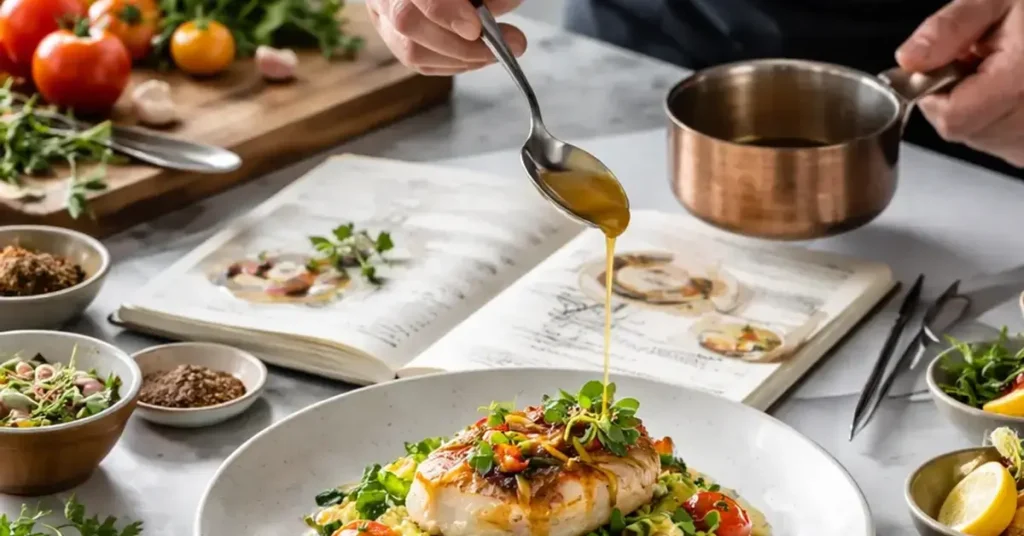
signature dish inspiration recipe development plating evolution Key Takeaways
Every legendary dish starts with a personal spark, undergoes a rigorous recipe development process , and ends with a plate that tells a story.
- Signature dish inspiration often comes from childhood memory, travel, or a single perfect ingredient — not from a cookbook.
- The recipe development process involves hundreds of tiny tweaks, from ratio adjustments to texture trials, before a dish earns its spot on the menu.
- Plating evolution is where function meets art: each iteration reveals a clearer vision of balance, color, and diner experience.
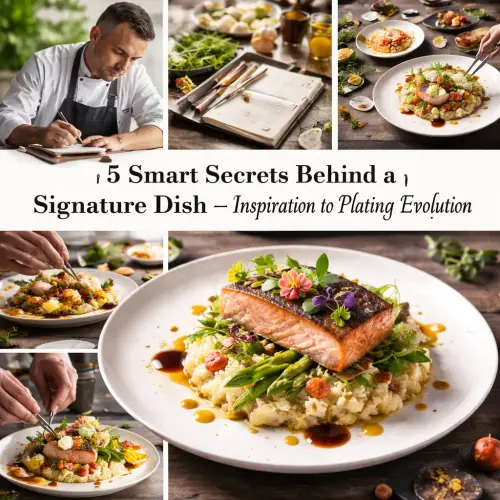
What Makes a Signature Dish Story Unforgettable?
Think about the last meal that truly moved you. Was it just the flavor? Or was it the signature dish story behind it — the chef’s mom’s garden, a rainy night in Bangkok, a happy mistake that turned into gold? The most compelling dishes don’t start with a spreadsheet. They begin with emotion.
When a chef can trace a signature dish inspiration to a real moment, the dish carries that energy to the table. That authenticity resonates with guests. They’re not just eating — they’re tasting a memory. And that’s the first secret: a signature dish has soul before it has a recipe. For a related guide, see Worst Surprise Tasting Menu Mistake: Avoid This Fine Dining Disaster.
The Spark That Starts Everything
For many chefs, the recipe development process begins not in the kitchen but in a memory. Maybe it’s the smell of garlic sizzling in olive oil at a seaside taverna. Maybe it’s the first time they bit into a perfectly ripe heirloom tomato. That sensory anchor becomes the North Star for every later decision.
I once worked with a chef who built a whole menu around a single pink peppercorn he’d found in a market in Madagascar. That peppercorn wasn’t just a spice — it was a portal. Every component on the plate was chosen to make that pink peppercorn sing. That’s the power of starting with signature dish inspiration rooted in a real place. For a related guide, see Same Chef, Two Concepts: 5 Key Differences Between Tasting Menu and Bistro.
From Spark to Structure: The Recipe Development Process
Here’s where the romance meets the rigor. The recipe development process is equal parts science and stubbornness. It’s not about getting it right the first time — it’s about getting it less wrong each time. The best chefs I know treat every iteration as a vote toward clarity.
Step 1: Lock the Flavor Anchor
Before you touch a pan, you need to know your destination flavor. Is it smoky? Bright? Earthy? That anchor becomes the yardstick for every choice. If a component doesn’t support that anchor, it gets cut. Simple. Brutal. Effective.
Step 2: Build the Bones with Technique
The recipe development process often moves through three technique stages:
- Isolation — test each component alone until it stands on its own.
- Marriage — combine components and adjust ratios until they harmonize.
- Tension — add contrast (acid, salt, texture) so the dish feels alive.
Most chefs fail not because the technique is wrong but because they skip the isolation stage. They stack untested parts and hope for magic. Pro move: test each element solo before you assemble the final plate.
Step 3: Taste, Log, Adjust, Repeat
I’ve watched chefs keep a notebook of every single trial. Salt amount, resting time, plating temperature — all logged. The recipe development process becomes a conversation with your own history. “Last time I added lemon after the butter and it was too sharp. Let’s try adding it before.” That log is gold. It turns guesswork into a repeatable system.
Plating Evolution: The Art of Learning to See
Plating is the most visible part of the signature dish story, yet it’s the one most chefs change the most. The plating evolution of a dish is rarely a straight line. It’s more like a sculpture emerging from clay — you remove what doesn’t belong until only the essential remains.
From Cluttered to Clear
Early plates often suffer from “completeness syndrome” — the urge to put everything on the plate. The first version of one chef’s dish I remember had six elements, three sauces, and a garnish that looked pretty but tasted like nothing. The final version had three components, one sauce, and a single petal. And it was unforgettable.
Plating evolution is really about subtraction. Every time you ask “Does this bite taste better with that?” and answer honestly, you evolve.
Height, Negative Space, and Movement
Professional plating uses visual principles borrowed from design. Here’s a quick breakdown:
| Principle | What It Means | Example in Plating |
|---|---|---|
| Height | Layered vertical composition | Protein stacked on a purée, topped with microgreens |
| Negative space | Intentional empty areas on the plate | Leaving half the plate bare to frame the main ingredient |
| Movement | Directional lines guiding the eye | A swoop of sauce that leads from protein to garnish |
The plating evolution of a dish often sees these principles sharpen over time. What starts as a flat, crowded plate becomes a cinematic composition.
Avoiding Common Menu Mistakes in Your Signature Dish Story
Even the most inspired dishes can fail if you fall into these traps. Here are three common menu mistakes that derail a signature dish inspiration recipe development plating evolution journey:
- Overcomplicating the story — if you need a paragraph to explain the dish, the plate isn’t speaking for itself.
- Skipping the feedback loop — never finalize a dish without fresh eyes (and fresh palates) testing it blind.
- Ignoring the temperature reality — a dish that works in a test kitchen may not hold heat on a busy service. The recipe development process must include service simulation.
Remember: a signature dish story is only as good as its last plate. If the story doesn’t survive the chaos of a Friday night rush, it’s not a signature dish — it’s a nice idea.
Final Recommendations: How to Build Your Own Signature Dish Journey
If you’re a chef or a passionate home cook dreaming of your own signature plate, here’s a practical path:
- Start with a real memory — that’s your signature dish inspiration. Write it down in detail.
- Test one component at a time — the recipe development process works best when you isolate variables.
- Photograph every plate version — visual history accelerates your plating evolution because you can see the progress.
- Serve it to 10 people before you menu it — honest feedback is the fastest growth tool.
- Let the dish breathe — walk away for a week, then come back and taste it with fresh ears (and nose). You’ll see the next step instantly.
The best signature dish story is one that evolves even after it’s on the menu. The truly great chefs never stop refining.
Useful Resources
For deeper insight into the recipe development process and plating evolution, explore these trusted sources:
- Chef’s Pencil Guide to Recipe Development – a practical breakdown of how professional chefs test and scale their creations.
- Fine Dining Lovers – Plating Techniques – visual examples of plating evolution from minimalist to intricate fine-dining styles.
Frequently Asked Questions About signature dish inspiration recipe development plating evolution
What is a signature dish story ?
A signature dish story is the narrative behind a chef’s most iconic creation — where the inspiration came from, how the recipe was developed, and how the plating evolved into its final form. It connects diners to the dish emotionally.
How do you find signature dish inspiration?
Signature dish inspiration often comes from childhood memories, travels, seasonal ingredients, or a single moment of culinary discovery. It’s less about copying trends and more about capturing a personal, authentic experience. For a related guide, see 7 Must-Know Secrets for a Flawless Restaurant Launch Event.
What is the recipe development process in a professional kitchen?
The recipe development process typically involves isolating each ingredient, testing ratios, adjusting technique, logging every trial, and repeating until the dish achieves balance, consistency, and service readiness.
How long does a recipe development process take?
It varies widely — from a week to several months. A complex signature dish inspiration recipe development plating evolution cycle can require dozens of iterations before the chef feels the dish is ready for a menu.
What does plating evolution mean?
Plating evolution refers to the gradual refinement of a dish’s visual presentation. It moves from cluttered and functional to intentional and artistic, often applying design principles like height, negative space, and movement.
Why is plating evolution important for a signature dish?
Plating evolution matters because the visual experience sets expectations for taste. A well-evolved plate makes the dish more memorable, photographable, and aligned with the chef’s artistic vision.
What are common mistakes in the recipe development process ?
Common mistakes include skipping isolation testing, ignoring service simulation, not logging trials, and adding too many components too early. These slow down the recipe development process and muddy the dish’s focus.
How do chefs test a dish during development?
Chefs test a dish by making small changes to one variable at a time — salt, acid, cooking time — and tasting blind. They also gather feedback from peers and run the dish through a mock service to test speed and consistency.
What tools do chefs use for recipe development?
Common tools include digital scales, pH meters, brix refractometers, temperature probes, and detailed logbooks. Some use recipe management software to track the recipe development process across multiple versions.
Can a signature dish evolve after it’s on the menu?
Yes — the best chefs keep refining. The signature dish story is never fully finished. Subtle tweaks to technique, plating, or garnish can happen based on seasonal availability or diner feedback.
What role does feedback play in recipe development?
Feedback is critical. Honest tasting notes from colleagues and diners reveal blind spots and help chefs make objective decisions during the recipe development process.
How do you plate a dish to tell a story?
Plating for story means every element has a reason. Use color to hint at an ingredient’s origin, height to suggest abundance, and negative space to focus attention. That’s part of a compelling plating evolution.
What is the most important plating principle?
Balance — between flavors, textures, and visual weight. Without balance, even a beautiful plate feels disjointed. The plating evolution of a dish always centers on improving that balance.
Do all signature dishes have a story?
Not all, but the most memorable ones do. A signature dish story adds depth and connection that a technical recipe alone cannot provide. It’s what turns a meal into a memory.
What if my signature dish inspiration is very simple?
Simple inspiration is often the strongest. A single perfect carrot from a local farm can become the anchor of a stunning dish. The recipe development process elevates simplicity through precision.
How many times should you test a dish before serving?
There’s no magic number, but most chefs test a dish at least 10–20 times before it reaches the menu. The recipe development process continues even after that.
What is the hardest part of plating evolution ?
Letting go of a version you love but that doesn’t work. The plating evolution requires brutal honesty — a component that looks gorgeous but adds nothing must go.
Can home cooks apply signature dish techniques?
Absolutely. Home cooks can use the same signature dish inspiration recipe development plating evolution approach at a smaller scale. Start with a favorite ingredient, test systematically, and photograph each attempt.
How do you know when a dish is “done” evolving?
You know when every component on the plate feels inevitable — when you can’t imagine removing or changing anything without losing the dish’s soul. That’s the end of the plating evolution for that moment.
What is the biggest lesson in signature dish creation?
The biggest lesson is patience. The signature dish story is not written in a day. It emerges through consistent, curious, and sometimes messy iteration. Trust the process.