
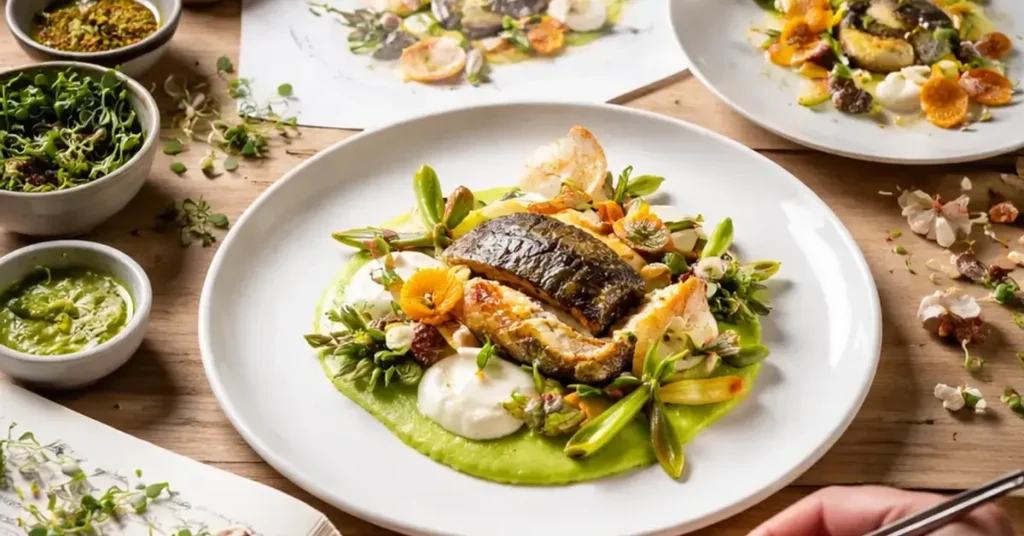
signature dish evolution Key Takeaways
A great signature dish evolution begins with a spark of inspiration, matures through dedicated recipe development, and reaches its final form only after thoughtful plating evolution .
- The signature dish evolution starts with a personal or cultural anecdote that gives the dish meaning.
- Recipe development is an iterative process requiring multiple rounds of testing, feedback, and adjustment.
- Plating evolution transforms a delicious recipe into a visual masterpiece that enhances the dining experience.

The Inspiration That Sparks a Signature Dish Evolution
Every memorable dish has a origin story. For many chefs, the inspiration arrives unannounced—a childhood memory, a travel encounter, or a humble ingredient suddenly demanding attention. Take the example of Chef Maria Santos, whose award-winning “Smoked Mango and Chili Ceviche” was born from a rainy afternoon in her grandmother’s kitchen in Oaxaca. The scent of charred mangoes mingling with smoky chipotle peppers brought her back to a market trip years earlier. That emotional anchor gave the dish its soul. For a related guide, see 7 Ways a Chef’s Origin Story Shapes Their Cuisine – Expert Insights.
But inspiration alone doesn’t create a signature dish evolution. It provides the seed. The real work begins when you ask: What if I paired this with something unexpected? How can I balance the heat with sweetness? Which texture will surprise the guest? These questions transform a fleeting thought into a recipe worth developing.
Finding Your Own Culinary Spark
To replicate this process, start by journaling about meals that moved you. Describe flavors, textures, and the setting. Then identify one ingredient or technique you love and imagine it in a new context. For example, if you adore the earthy bitterness of radicchio, picture it grilled over charcoal with a drizzle of aged balsamic and a pinch of sea salt. That moment of curiosity is the beginning of your signature dish evolution.
The Recipe Development Process: From Idea to Plate
Moving from inspiration to a repeatable, consistent dish is where most aspiring chefs stumble. The recipe development process is not linear; it loops back and forth between testing, tasting, and adjusting. A structured approach saves time and yields better results. For a related guide, see Same Chef, Two Concepts: 5 Key Differences Between Tasting Menu and Bistro.
Step 1: Draft a Baseline Recipe
Write down your initial idea with quantities, cooking methods, and plating notes. Don’t aim for perfection. This is your hypothesis. For the smoked mango ceviche, Chef Santos started with equal parts mango and shrimp, a heavy hand of lime juice, and a pinch of salt. She knew the acidity would “cook” the shrimp, but she had no idea how the smoke would interact with the citrus.
Step 2: Cook and Taste Critically
Cook your baseline. Taste it alone, then with each element. Ask: Does the smoke overpower the mango? Is the chili heat too sharp? Does the texture feel balanced? Take notes immediately. Chef Santos discovered the smoke didn’t penetrate the mango slices evenly, so she switched to smoking the whole mango before dicing.
Step 3: Iterate with Purpose
Make one change at a time. Changing two variables simultaneously confuses your palate. After three iterations, invite a trusted colleague to taste blind and give honest feedback. This external perspective is gold. In the recipe development process, humility and curiosity matter more than ego.
Step 4: Lock the Core and Play with Variations
Once the base recipe is solid, experiment with seasonal twists. A summer version might include fresh peaches; a winter version, roasted squash. These variations keep the dish evolving without losing its identity.
Plating Evolution: The Art of the Final Impression
A dish that tastes incredible but looks messy will never become a signature. Plating evolution is the process of refining presentation to communicate the dish’s story and enhance the eating experience. It is as iterative as the recipe itself.
Why Plating Matters for Your Signature Dish Evolution
Guests eat with their eyes first. A well-plated dish builds anticipation and signals care. Moreover, plating affects how flavors are perceived—a tall stack might compress textures, while a wide swipe of sauce can make a portion feel generous. The visual arrangement guides the diner’s first bite.
Stages of Plating Evolution
- Stage 1: Functional. Place components on the plate so they are easy to eat. For example, sauces underneath the protein to keep it moist.
- Stage 2: Balanced. Consider color contrast, negative space, and height. A simple rule: odd numbers of elements (three scallops, five dots of sauce) look more dynamic than even.
- Stage 3: Story-driven. The plating should echo the dish’s inspiration. Chef Santos plates her ceviche on a black slate to mimic the charred grill marks and serves it with a tiny wooden spoon—a nod to the market stalls of Oaxaca.
Common Plating Mistakes to Avoid
Don’t overcrowd the plate. Leave at least 30% of the surface empty to let the food breathe. Avoid garnishes that don’t serve a purpose—a sprig of rosemary that isn’t edible or aromatic confuses the diner. And never serve a sauce that doesn’t complement the dish just because it looks pretty.
A Practical Framework for Your Own Signature Dish Evolution
To help you replicate this journey, here is a four-stage framework:
| Stage | Key Action | Example (Smoked Mango Ceviche) |
|---|---|---|
| Inspiration | Identify an emotional anchor (memory, place, ingredient) | Rainy day in Oaxaca, grandmother’s kitchen |
| Recipe Development | Iterate through baseline, taste, adjust, lock | Switched to smoking whole mangoes |
| Plating Evolution | Functional → Balanced → Story-driven | Black slate plate, wooden spoon, negative space |
| Refinement | Collect feedback, adjust portion, test seasonal variations | Summer: add peach. Winter: add roasted squash |
This framework keeps you focused and prevents the common trap of endless tweaking without direction.
Real-World Examples of Signature Dish Evolution
Let’s look at two well-known dishes and how they evolved. The first is the “Black Cod with Miso” from Chef Nobu Matsuhisa. The inspiration came from his mother’s fish preparation in Japan, but the recipe development took years of adjusting the miso marinade’s sweetness and saltiness. The plating evolved from a simple fillet on a plate to a deliberate arrangement with a single shiso leaf and a swoosh of sauce, highlighting the fish’s glossy glaze.
The second example is “Heston Blumenthal’s Meat Fruit,” a chicken liver parfait disguised as a mandarin. The inspiration was British nostalgia for retro appetizers. The recipe development required dozens of tests to achieve the perfect jelly coating. The plating evolution culminated in a ceramic mandarin bowl that, when opened, revealed the parfait. The visual surprise became part of the story.
Useful Resources
For deeper insights into recipe development techniques, visit Serious Eats’ guide on creating your own recipes. To study plating principles, the Art of Plating website offers visual inspiration and breakdowns from leading chefs.
Frequently Asked Questions About signature dish evolution
What is the first step in developing a signature dish?
The first step is finding an emotional or sensory inspiration—a memory, a seasonal ingredient, or a travel experience that excites you. Write down the core flavors and textures you want to highlight.
How long does the recipe development process usually take?
It varies widely. A simple dish might take a few days of testing, while complex multi-component plates can take months. Most chefs report 10 to 20 iterations before locking a recipe.
What is the most common mistake in recipe development?
Changing too many variables at once. Adjust one ingredient, technique, or proportion at a time so you can isolate what works and what doesn’t.
How do I know when my signature dish is ready?
When you can execute it consistently, receive positive feedback from at least three impartial tasters, and feel confident that the plating communicates the dish’s story, it is ready.
Can a signature dish evolve after it’s launched?
Absolutely. Many chefs tweak plating or swap seasonal components. The core identity remains, but small evolutions keep the dish fresh and relevant.
What role does cultural context play in a signature dish evolution?
Cultural context gives the dish authenticity and a story. Guests connect with plates that reference a place or tradition, even if the execution is modern.
How important is plating evolution for a takeaway or delivery dish?
Plating matters less for delivery, but component layout still affects how flavors combine during travel. Focus on structure that withstands movement rather than visual artistry.
Should I cost the recipe during development?
Yes. Calculate ingredient cost per portion after the second iteration. If the dish is too expensive, adjust before falling in love with the final version.
What if my inspiration changes during development?
That is normal. Allow the dish to evolve. If a new idea improves the concept, pivot. Signature dishes often end up far from the original vision.
How do I test a dish objectively?
Use blind tastings with at least three people who don’t know the recipe history. Ask them to describe flavors, textures, and any missing elements. Record all feedback.
What is the best way to document the recipe development process ?
Keep a dedicated notebook or a digital file per dish. Note date, ingredient quantities, cooking method, tasting notes, and changes made. Photos of each iteration help track plating evolution.
Can I use the same plating style for multiple dishes?
It is better to adapt plating to each dish’s story. However, a consistent style (e.g., minimalist white plates, asymmetrical placement) can become part of your personal brand.
How many components should a signature dish have?
Three to five main components (protein, vegetable, starch, sauce, garnish) usually strike a good balance between complexity and clarity. More than six can overwhelm the palate.
What is the role of texture in plating evolution ?
Texture adds interest. Crunchy elements contrast with soft ones. Plating should separate textures visually—for example, placing a crispy tuile on top of a smooth mousse so the guest sees the contrast.
Should I plate the dish differently for different courses?
Yes. Appetizer plates are smaller and more intricate. Main course plates are larger with more generous portions. Dessert plating can be playful and decorative.
How do I handle dietary restrictions in a signature dish?
Design a base version that is naturally inclusive (e.g., gluten-free, nut-free). Then offer optional modifications like a cheese finish for those who tolerate dairy.
Can a signature dish be too complex?
Yes. If a dish requires 15 ingredients and 8 techniques, it becomes hard to execute consistently. Aim for a balance between depth and reproducibility.
What tools do I need for professional plating?
Squeeze bottles for sauces, offset spatulas for spreading, tweezers for precise placement, and ring molds for layering. Invest in quality tweezers—they make a big difference.
How do I present a signature dish to a guest?
Briefly share the inspiration or key ingredient story in one or two sentences. Let the plate speak for itself. Over-explaining can feel forced.
What is the best resource for learning plating techniques?
Books like “The Art of Plating” by Charles Carroll and online courses from platforms like MasterClass offer step-by-step guidance. Practice daily on a small plate to build muscle memory.