

chef’s origin story Key Takeaways
A chef’s origin story is not just a biography—it’s the blueprint of their culinary identity.
- Family traditions and regional ingredients often form the emotional core of a chef’s cooking style.
- Formal culinary training provides technical mastery, but it’s the personal history—travel, mentors, failures—that creates signature dishes.
- Understanding how a chef’s background shapes their cooking helps diners appreciate the story behind every bite.
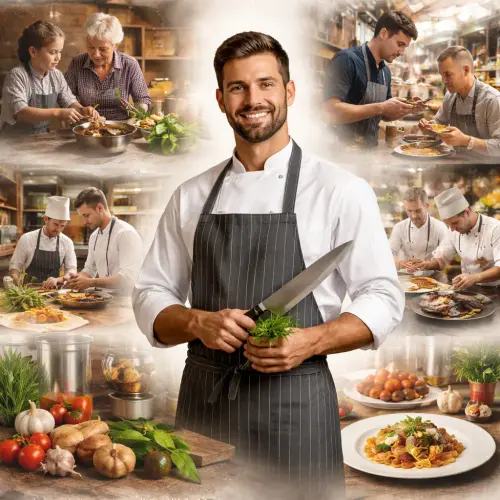
Why Understanding a Chef’s Origin Story Matters for Food Lovers
Every great dish has a story behind it. When you sit at a tasting menu or order a signature plate, you’re tasting layers of memory, technique, and personal evolution. A chef’s origin story explains why one chef obsesses over charred vegetables while another builds delicate seafood towers. For food enthusiasts, understanding this backstory transforms eating from a passive act into a rich, emotional experience. It also helps aspiring cooks see how how a chef’s background shapes their cooking in tangible, repeatable ways—whether through spice blends, fermentation methods, or plating styles. For a related guide, see KL’s Best Tasting Menu Under RM500 – Expert Roundup with Price-Performance.
7 Key Influences Every Chef’s Origin Story Reveals
Below are the seven most common pillars that appear in the origin stories of successful chefs. Each one directly impacts their current cuisine and menu decisions.
1. Family Kitchen Traditions – The First Classroom
For most chefs, the journey begins at home. Grandmother’s pasta, mother’s curry, or father’s grill become the baseline for flavor memory. Chef Massimo Bottura credits his grandmother’s kitchen in Modena as the source of his bold, nostalgic interpretations of Italian classics. This early exposure teaches a chef what comfort tastes like—and later, how to reinvent it.
2. Regional Terroir and Local Ingredients
Where a chef grows up determines their instinctive pantry. A chef from coastal Japan will approach fish with a different reverence than one from the American Midwest. This geographic fingerprint is one of the most overlooked elements in a chef’s origin story. It explains why Sean Brock champions Carolina Gold rice or why René Redzepi built a menu around foraged Nordic plants. These chefs aren’t just cooking—they’re translating their homeland onto a plate. For a related guide, see Worst Surprise Tasting Menu Mistake: Avoid This Fine Dining Disaster.
3. Apprenticeship and Culinary Training Influence
Formal education or stage work under a mentor leaves an indelible mark. The culinary training influence of a French mother-sauce approach or a Japanese kaiseki discipline often shows in a chef’s precision, plating, and flavor structure. Thomas Keller’s apprenticeship under French masters gave him the framework for The French Laundry’s meticulous style. The techniques learned during this period form the grammar a chef uses to write their culinary sentences later in their career.
4. Travel and Exposure to Global Flavors
A chef who has cooked in three different countries will naturally blend those experiences. Travel breaks rigid culinary borders and introduces unexpected pairings—miso in a beurre blanc, za’atar on a crème brûlée. This cross-pollination becomes a defining feature of a chef’s origin story and explains fusion cuisines that feel authentic rather than forced.
5. Career Failures and Pivots
The best chefs often have a failed restaurant or a disastrous service in their past. These low points teach resilience, resourcefulness, and humility. They also force a chef to ask tough questions about their identity. Many origin stories include a moment of reinvention—a chef who left a fine-dining kitchen to open a taco truck and discovered their true voice. These detours shape menus more profoundly than any culinary school lecture.
6. Personal Values and Philosophy (Sustainability, Health, Heritage)
A chef’s origin story is also a moral compass. A chef raised in a farming family may prioritize nose-to-tail cooking. Another who survived a health crisis might champion plant-forward cuisine. These values become the filter through which every ingredient and technique passes. When a chef states “I only cook what I believe in,” they are referencing the ethical backbone built over years of personal history.
7. The Intangible Gut Feeling – Instinct Over Recipe
The final influence is the hardest to quantify but the most powerful. Over time, a chef develops an instinct for balance, texture, and timing that no recipe can teach. This sixth sense is the culmination of every story, every burnt hand, every perfect bite they’ve ever had. It’s the reason a chef can walk into a pantry and assemble a dish that tastes like pure memory. This is the ultimate expression of how a chef’s background shapes their cooking.
How to Trace a Chef’s Origin Story in Their Menu
Next time you eat at a new restaurant, look for clues. A dish named after a grandmother, a sauce technique from a famous mentor, or an ingredient sourced from the chef’s hometown—all are breadcrumbs leading back to their story. You can also read chef memoirs or watch interviews to deepen your understanding. Recognizing these influences adds a layer of appreciation that turns a meal into a biography you can taste. For a related guide, see 5 Most Anticipated Restaurant Openings of 2026 – Ex-Beta Chef’s Omakase in Damansara.
Common Misconceptions About Chef Origin Stories
Some believe a chef’s origin story is only relevant for celebrity chefs. In reality, every line cook has a story that shapes their cooking, even if it hasn’t been told yet. Another misconception is that origin stories are static—they evolve as chefs grow. A chef who trained in classical French technique may later embrace fermentation or indigenous ingredients, adding new chapters to their narrative. Finally, origin stories aren’t always dramatic. Sometimes they’re simple: a grandmother who cooked with love, a first job washing dishes, a book that sparked curiosity. These quiet beginnings often produce the most soulful food.
Table: Comparing Culinary Training Backgrounds and Their Influence
| Training Background | Typical Strengths | Common Cuisine Direction | Example Chef |
|---|---|---|---|
| Classical French Apprenticeship | Sauces, technique, discipline | Fine dining, multi-course tasting menus | Daniel Boulud |
| Self-Taught / Home Kitchen Roots | Instinct, regional authenticity, soul | Comfort food, farm-to-table, rustic | Edna Lewis |
| Japanese Kaiseki Training | Precision, seasonality, presentation | Omakase, minimalist, ingredient-forward | Masa Takayama |
| Culinary School (e.g., CIA, Le Cordon Bleu) | Foundational skills, versatility, safety | Diverse, often experimental or corporate | Grant Achatz |
| Stage in Multiple International Kitchens | Adaptability, fusion, creativity | Eclectic, globally inspired menus | David Chang |
How to Use a Chef’s Origin Story to Build Your Own Cooking Identity
Aspiring cooks can learn directly from these narratives. Start by writing down your own food memories—what did your family cook? Where did you learn a specific technique? What flavors feel like home? Then, identify one technique or ingredient from your training that you want to master. Finally, experiment with combining your personal history with formal skills. That mix is your unique voice. The most compelling chefs are those who honor their past while constantly learning.
Useful Resources
For deeper reading on how personal history influences culinary creativity, visit Food and Wine’s Chef Stories Collection for interviews and origin narratives. Another excellent resource is Worldchefs, which offers insights into global culinary training paths and their impact on modern cuisine.
Frequently Asked Questions About chef’s origin story
What is a chef’s origin story?
A chef’s origin story is the narrative of their personal history, training, and key life experiences that shape their culinary style and philosophy.
Why is a chef’s background important in cooking?
A chef’s background directly influences the flavors, techniques, and ingredients they choose, making their cooking unique and authentic.
How does family history affect a chef’s cooking?
Family traditions create a flavor memory and emotional connection that often becomes the foundation of a chef’s signature dishes.
Can a chef change their style after training?
Yes, a chef’s origin story is not static—it evolves with new experiences, travel, and continued learning, allowing their style to grow.
What role does culinary school play in a chef’s story?
Culinary school provides technical skills and foundational knowledge, which a chef then filters through their personal history to create a unique voice.
How do mentors influence a chef’s origin story?
Mentors impart techniques, work ethic, and philosophies that often become a lasting part of a chef’s approach to cooking.
What is the difference between a chef’s origin story and a biography?
An origin story focuses specifically on the formative experiences that directly shape a chef’s cooking, while a biography covers their entire life.
How can I learn a chef’s origin story?
You can read chef memoirs, watch documentaries, listen to interviews, or visit their restaurants and observe menu descriptions.
Do all chefs have a compelling origin story?
Every chef has a story, though some are more dramatic than others. Even simple beginnings can lead to profound culinary expression.
How does travel shape a chef’s cuisine?
Travel exposes chefs to new ingredients, techniques, and flavor combinations, which they often integrate into their own cooking style.
Is a chef’s origin story important for home cooks?
Yes, understanding your own food history can help home cooks develop a more personal and confident cooking style.
Can a chef’s origin story change over time?
Yes, as chefs gain new experiences, their story expands and their cooking evolves to reflect fresh influences.
What is the most common element in chef origin stories?
Family and childhood food memories are the most frequently cited origin point across chef interviews and memoirs.
How does failure affect a chef’s origin story?
Failure often forces a chef to re-evaluate their approach, leading to growth, reinvention, and a more authentic culinary voice.
Are there famous chefs with unusual origin stories?
Yes, many chefs have unconventional paths—former musicians, lawyers, or farmers—bringing diverse perspectives to their cuisine.
How does a chef’s origin story influence menu prices?
While not directly, the commitment to high-quality ingredients or specific techniques rooted in a chef’s story can affect pricing.
What is the best way to share a chef’s origin story?
Through restaurant websites, social media storytelling, menu notes, and media interviews that highlight the personal journey.
Why do diners care about a chef’s origin story?
Origin stories create emotional connection and make the dining experience more memorable and meaningful.
Can a chef’s origin story be a marketing tool?
Yes, an authentic origin story can differentiate a chef in a crowded market and build a loyal following.
How do I start writing my own chef origin story ?
Begin by listing your earliest food memories, significant learning experiences, and the people who influenced your cooking. Then connect them to your current style.