
High Tea vs Afternoon Tea Key Takeaways
If you think high tea vs afternoon tea is just a fancy name for the same thing, you’re not alone — but you’re also about to learn why that mix-up ruins a perfectly good scone.
- High Tea vs Afternoon Tea are two distinct meals with different origins, menus, and serving times.
- Getting the scone right — warm, crumbly, and never cut with a knife — is the benchmark of a perfect afternoon tea.
- Clotted cream and jam go on a scone in a specific order depending on whether you’re in Cornwall or Devon, and yes, it matters.
Understanding the Real Difference: High Tea vs Afternoon Tea
Most of us have used the terms interchangeably, but the high tea guide you’ve been following probably skipped the most important part: class history. Afternoon tea was invented by Anna, the Duchess of Bedford, around 1840. She got hungry between lunch and dinner, so she asked for tea, bread and butter, and cake in her room. Soon she started inviting friends, and the ritual of afternoon tea was born. It was a leisurely affair for the upper class, served on low tables in drawing rooms. For a related guide, see Private Dining Room Guide: Avoid Costly Mistakes on Minimum Spends and Hidden Gems.
High tea, by contrast, was the evening meal of the working class. After a long day in factories or fields, workers needed a substantial supper — tea, meat pies, pickled fish, cheese, and bread — served at the “high” dining table. So when you search for an afternoon tea guide and end up with a menu of pork pies and ale, you’ve crossed into high tea territory. Understanding this origin helps you order the right experience, whether you’re at The Ritz or a cozy countryside tearoom.
A Quick History of Afternoon Tea
Afternoon tea became a status symbol among Victorian women. The menu evolved to include delicate cucumber sandwiches, fruit scones, and petit fours. Tea was poured from silver pots into fine bone china cups. The ritual was so important that special “tea gowns” were designed for the occasion — looser than corseted dinner dresses, since guests were expected to lounge on sofas.
How High Tea Got Its Name
“High” referred to the table height, not the social status. High tea was eaten at a regular dining table, while afternoon tea was served on low coffee tables. The meal itself was hearty: a pot of strong tea, cold meats, pickles, and bread with butter and jam. Today, many hotels market a “high tea” as a gourmet experience, but purists will point out that real high tea is comfort food, not finger food.
Choosing the Right Tea for Your Afternoon Tea Spread
Before you even think about scones, you need a proper pot of tea. The classic choice is a blend like English Breakfast or Assam — robust enough to stand up to milk and sugar. Earl Grey, with its bergamot aroma, is a favorite for lighter palates and pairs beautifully with lemon curd. Darjeeling is the “champagne of teas,” delicate and floral, best served without milk.
For a modern twist, consider jasmine green tea or a caffeine-free rooibos. Whatever you choose, steep it for exactly 3–5 minutes, depending on the variety. And always warm the teapot first with a splash of hot water. This single step keeps the tea hot longer and brings out the full flavor.
Tea Selection Mistakes to Avoid
Never serve tea bags in a pot without removing the tag. Better yet, use loose-leaf tea in an infuser. Another common mistake is pouring milk before the tea — that’s a working-class habit from the days of cheap china that would crack under boiling liquid. Today, pour the tea first, then add milk to taste.
The Perfect Scone: Your Afternoon Tea Ace Card
A scone is the centerpiece of any afternoon tea guide. It should be soft on the inside, slightly crisp on the outside, and warm when served. The ideal scone is neither too dry nor too dense. It should tear apart easily, never crumble into a thousand pieces. Buttery and slightly sweet, it should never taste like a rock.
Mastering scones at home starts with cold butter. Cut it into the flour using your fingertips until the mixture looks like breadcrumbs. Add dried fruit only after the dough has rested for 10 minutes. Brush the tops with cream or egg wash for a golden crust. Bake at 400°F (200°C) for 12–15 minutes — no longer.
7 Mistakes to Avoid for the Perfect Scone
Let’s cover the most common pitfalls so your scones earn the “perfect” label:
- Overworking the dough — Scones become tough if you knead too much. Mix just until combined.
- Using warm butter — Room-temperature butter melts into the dough before baking, leaving no pockets of steam to create flakiness.
- Twisting the cutter — Press straight down and lift. Twisting seals the edges and prevents rising.
- Baking on a cold tray — Always use a hot baking sheet for a better rise.
- Cutting scones too thick — ¾ inch is ideal. Thicker scones may brown outside before baking through.
- Skipping the resting step — Chill the shaped scones for 15 minutes in the fridge before baking to prevent spreading.
- Stale scones — Scones lose quality within hours. Bake them fresh and serve within 30 minutes.
Finger Sandwiches: The Art of Dainty Fillings
Finger sandwiches are the first course of an afternoon tea. They must be small, crustless, and cut into neat rectangles or triangles. The bread should be thin and fresh, spread with a thin layer of butter to keep it from going soggy. Classic fillings include cucumber and cream cheese, smoked salmon with dill, egg mayonnaise with cress, and ham with mustard.
For a truly authentic experience, use a serrated knife to cut the crusts after the sandwich is assembled. Keep varieties separated by a damp paper towel under a clean tea towel to maintain freshness until serving. Arrange them on the bottom tier of your stand, alternating colors for visual appeal.
How to Layer Finger Sandwiches Like a Pro
Start with the bottom tier: place 4–6 small sandwiches per person, with two of each filling. Work from mild flavors (cucumber) to stronger ones (ham, salmon). This ensures each bite builds in intensity. Never stack sandwiches — they should sit in a single layer for easy picking.
Clotted Cream: The Crown Jewel of Your Tea Table
Clotted cream is the thick, yellow cream that forms when full-fat milk is heated slowly and then cooled. It has a nutty, caramelized flavor and a texture like spreadable butter. True Devon or Cornwall clotted cream has a minimum fat content of 55%. Nothing else — not whipped cream, not crème fraîche — can replace it.
Spread it on a warm scone, but pay attention to the order. In Devon, the tradition is cream first, then jam. In Cornwall, it’s jam first, then cream. Both regions will defend their method fiercely. The choice is yours, but either way, the combination is sublime.
Serving Tips: The Perfect Tea Table Setup
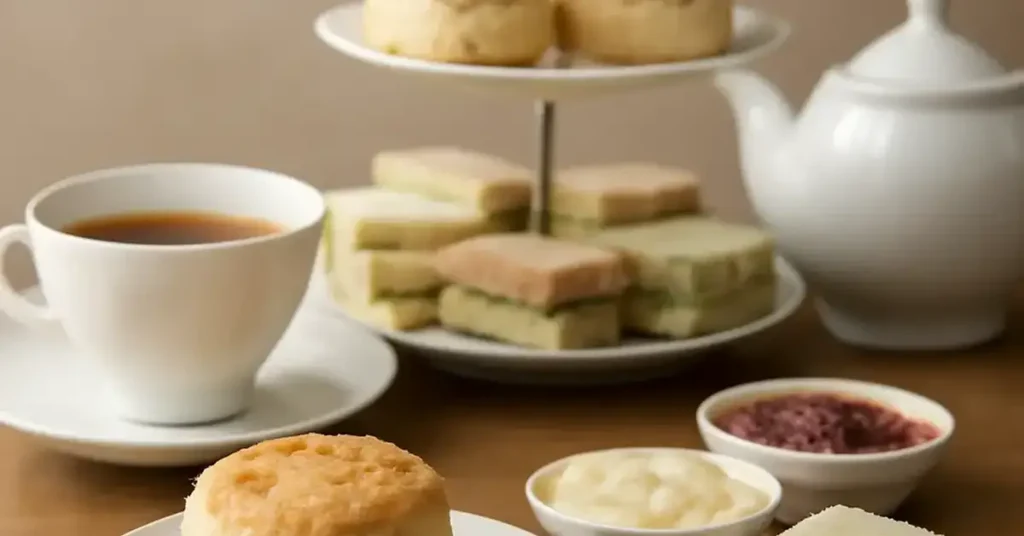
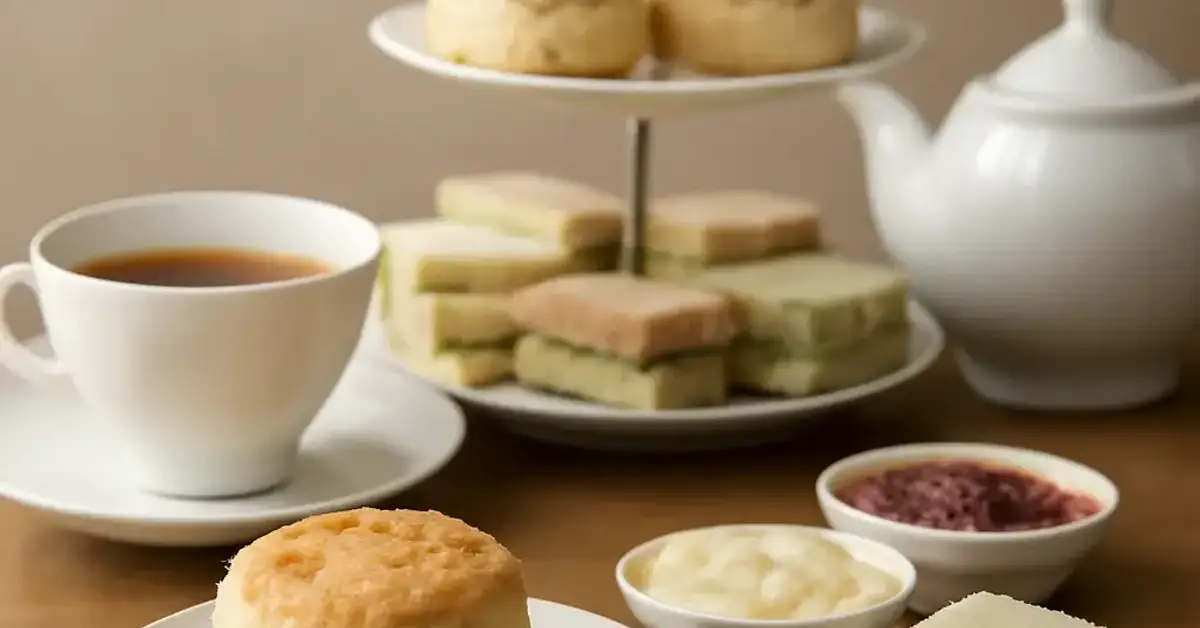
Your tea table should feel like a picture from a storybook. Use a linen tablecloth, fresh flowers, and delicate china. A three-tiered stand is traditional: bottom for finger sandwiches, middle for scones, top for pastries and cakes. Teacups should have saucers, and each guest needs a small plate, a butter knife, and a napkin.
Serve tea from a warmed pot, and offer sugar cubes and a small pitcher of milk. For an added touch, provide lemon slices wrapped in muslin to hold in the seeds. Present the finger sandwiches and scones only when guests are seated, and replenish hot water for second infusions.
Pairing Ideas: Teas That Complement Your Menu
Pairing tea with food isn’t as common as wine pairing, but it elevates the experience. Here’s a quick reference:
| Food | Tea Pairing | Why It Works |
|---|---|---|
| Cucumber sandwich | Earl Grey | Bergamot lifts the mild cucumber flavor |
| Smoked salmon sandwich | Darjeeling | Floral notes balance the smoky richness |
| Fruit scone with jam and cream | Assam | Maltiness stands up to sweetness |
| Lemon tart | Jasmine green tea | Citrus and floral harmonize |
| Chocolate éclair | English Breakfast | Boldness cuts through chocolate |
Useful Resources
For a deeper dive into tea history and etiquette, visit the UK Tea and Infusions Association. For traditional recipes and baking tips, check out the BBC Good Food scone guide.
Frequently Asked Questions About High Tea vs Afternoon Tea
What is the main difference between high tea and afternoon tea?
Afternoon tea is a light, elegant meal of finger sandwiches, scones, and pastries served at low tables in the afternoon. High tea is a hearty working-class meal served at a high dining table in the early evening. For a related guide, see Mother’s Day Afternoon Tea Guide: 5 Elegant High Teas in Malaysia.
Is clotted cream the same as whipped cream?
No. Clotted cream has a much higher fat content (55% or more) and a thick, spreadable texture. Whipped cream is airy and only about 35% fat.
Should scones be warm or cold?
Always warm. Freshly baked scones served within 30 minutes of coming out of the oven are ideal. Cold scones become dry and hard.
Can I use any tea for afternoon tea?
Classic choices are black teas like Assam, English Breakfast, or Darjeeling. But Earl Grey, jasmine, and herbal teas are also popular.
How many finger sandwiches per person?
Plan for 4–6 small sandwiches per person, with a variety of fillings.
What is the correct order of eating an afternoon tea?
Start with the savory finger sandwiches on the bottom tier, then move to the middle tier for scones, and finish with the top tier of sweet pastries.
Do you put jam or cream first on a scone?
In Devon, cream first; in Cornwall, jam first. Either is acceptable, but choose one and stick with it.
Why are they called finger sandwiches ?
Because they are small enough to eat with your fingers — no fork required. They are typically cut into rectangles or triangles with the crusts removed.
Can I make scones ahead of time?
You can prepare the dough and refrigerate it overnight, but bake them fresh on the day of serving for the best texture.
What is the best flour for scones ?
All-purpose or self-rising flour works well. Self-rising flour already contains baking powder, making the process simpler.
Why are my scones flat?
Your butter may have been too warm, you twisted the cutter, or the dough was overworked. Chilling the shaped scones before baking helps.
Is high tea more expensive than afternoon tea?
At restaurants and hotels, “high tea” menus are often priced higher due to the meat and seafood included, but there is no standard rule.
Can I have afternoon tea without clotted cream ?
You can, but it’s not traditional. Clotted cream is a key component of the scone course, and substitutes like mascarpone or thick double cream are acceptable.
What is the best time for afternoon tea?
Traditionally between 3 p.m. and 5 p.m. It is meant to bridge the gap between a midday meal and a late dinner.
Should I serve milk or lemon with tea?
Both are acceptable, but never together — lemon curdles milk. Offer both options and let guests choose.
Do you need a tea strainer for loose-leaf tea?
Yes. Pour tea through a small mesh strainer into each cup to catch the leaves, or use a tea infuser inside the pot.
Can children attend afternoon tea?
Absolutely. Many venues offer a “children’s afternoon tea” with smaller portions and child-friendly fillings.
What is the difference between a scone and a biscuit?
Scones are slightly sweet, often contain fruit, and are served with clotted cream and jam. Biscuits are savory, buttery, and served with gravy or butter.
How should I store leftover clotted cream ?
Keep it in the refrigerator in an airtight container. It will last up to two weeks if stored properly.
Can I make finger sandwiches the night before?
Yes, but store them wrapped in damp paper towels inside an airtight container to prevent the bread from drying out.