
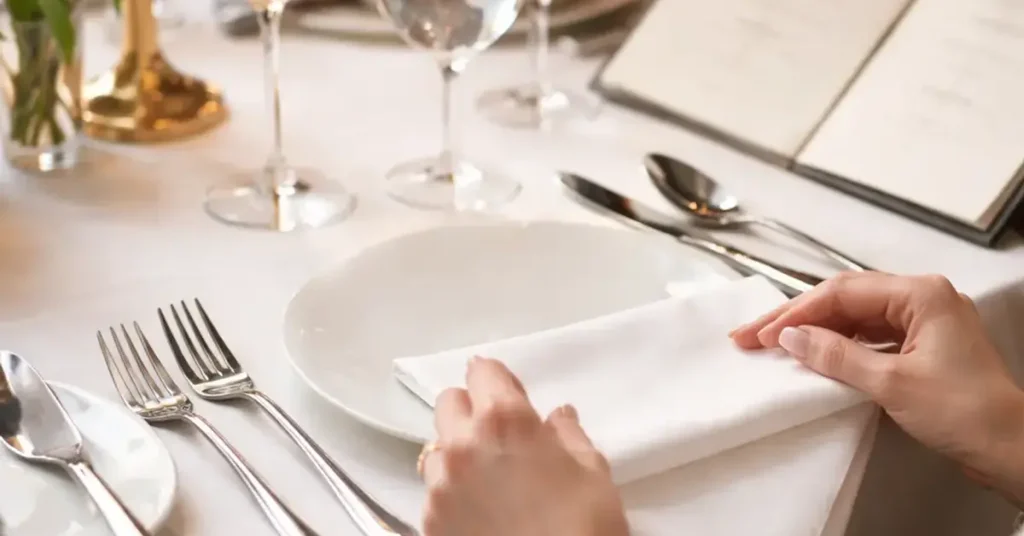
Fine Dining Etiquette Key Takeaways
Mastering fine dining etiquette transforms an ordinary meal into a polished experience that shows respect for the host, the chef, and your fellow diners.
- Fine dining etiquette hinges on three core pillars: napkin placement , cutlery use , and wine list timing.
- Understanding the “outside-in” rule for cutlery keeps you from reaching for the wrong fork.
- Asking for the wine list at the right moment shows sophistication rather than impatience.
Why Fine Dining Etiquette Still Matters Today
In an era of casual dining, formal table manners might seem outdated. But fine dining etiquette is not about snobbery—it is about making everyone at the table feel comfortable. Knowing which bread plate is yours prevents awkward double-dips, and correct napkin placement signals that you are present and engaged.
Beyond personal comfort, good etiquette reflects respect for the chef’s craft. When you handle cutlery properly, you allow the food to be the star. And when you order wine with confidence, you honor the sommelier’s expertise. In short, fine dining etiquette is a quiet language of courtesy that elevates every meal.
Whether you are a first-time fine diner or a seasoned gourmand, revisiting these basics helps you avoid common slips that can distract from an otherwise perfect evening.
The 7 Essential Rules of Fine Dining Etiquette
These seven rules cover the most common scenarios you will encounter at a formal table. Practice them once, and they will become second nature.
Rule 1: Napkin Placement – When to Unfold and Where to Rest
Napkin placement is the first gesture of the meal. Place your napkin on your lap as soon as you are seated. If the napkin is large, fold it in half with the fold facing your body. For smaller napkins, unfold it completely and lay it flat across your thighs.
Never tuck a napkin into your collar like a bib. If you need to leave the table temporarily, place the napkin loosely on your chair arm or seat, not on the table. At the end of the meal, gently fold the napkin and set it to the left of your plate—not crumpled and not perfectly refolded.
Rule 2: Cutlery Use – The Outside-In Rule
Cutlery use follows a simple “outside-in” sequence: start with the fork or spoon farthest from your plate on the left, and the knife farthest from your plate on the right. For a typical multi-course meal, this means the salad fork is used first, then the dinner fork. The dessert fork and spoon are placed above your plate and are used last.
Hold cutlery correctly: knife in your right hand, fork in your left (or switch after cutting). Rest the knife and fork in a “V” shape on your plate while you take a pause. When you finish, place them parallel across the center of the plate with handles at 4 o’clock. This signals the server that you are done.
Rule 3: Wine List Etiquette – When and How to Ask
Wine list etiquette begins with timing. Do not ask for the wine list before you have ordered your meal. The sommelier or server will typically present the list after you have chosen your main course. If you are hosting others, it is polite to ask your guests for their preferences before selecting.
When the sommelier suggests a wine, do not feel pressured to order the most expensive bottle. A simple “I trust your recommendation for a wine that pairs well with the table’s choices” shows confidence. If the wine is opened at the table, the host is offered a small taste first. Nod or say “thank you” if it is satisfactory—do not send it back unless it is genuinely flawed.
Rule 4: Bread and Butter – The Proper Reach
The bread plate is always to your left. The drinking glasses are to your right. This simple rule, known as “BMW” (bread-meal-water), saves you from grabbing a stranger’s roll. Use your butter knife (usually resting on the butter dish) to scoop butter onto your own bread plate, then spread it on small pieces of bread as you eat them—not the whole roll at once.
Rule 5: Soup and Spoon – Direction Matters
Soup is typically served in a wide, shallow bowl. Hold the spoon in your right hand and tilt the bowl away from you as you scoop. Sip from the side of the spoon (not the tip) without slurping. When you finish, rest the spoon on the plate beneath the bowl, not in the bowl itself.
Rule 6: The Wine Tasting Ritual
When wine is served at the table, the server pours a small amount for the host. Pick up the stem (not the bowl) and examine the color. Swirl gently to release aromas, then sniff. Taste a sip, and nod or confirm verbally. This ritual is part of wine list etiquette and shows you value the experience.
Rule 7: Handling Mishaps with Grace
Even with perfect fine dining etiquette, accidents happen. If you spill wine, stay calm. Signal your server discreetly with a glance or a quiet “excuse me.” Never try to clean the spill yourself. If you drop a piece of cutlery, leave it on the floor and quietly ask for a replacement. The staff is trained to handle these situations without fuss. For a related guide, see Worst Surprise Tasting Menu Mistake: Avoid This Fine Dining Disaster.
Common Mistakes Even Seasoned Diners Make
Knowing the rules is one thing; avoiding slip-ups is another. Here are three frequent errors and how to fix them.
Elbows on the Table
While elbows on the table between courses is now acceptable in many circles, during the meal keep your hands in your lap or your wrists on the table edge. This keeps your posture open and your cutlery use precise.
Loudly Signaling the Server
Snapping fingers or calling “waiter” is never appropriate. Make eye contact and raise your index finger slightly, or simply say “excuse me” when the server passes. For wine refills, a slight nod toward your glass is enough.
Over-Ordering Wine
When you ask for the wine list, do not feel obligated to order a bottle for each course. A single bottle that complements the meal is fine. Wine list etiquette encourages moderation and respect for the sommelier’s guidance.
How to Practice Fine Dining Etiquette at Home
The best way to master these rules is through practice. Set a formal table at home with all the components: multiple forks, knives, spoons, a bread plate, and various glasses. Walk through a mock meal—soup, salad, main, and dessert—using the outside-in rule for cutlery use. This low-stakes rehearsal builds muscle memory so that in a real fine dining setting, you act naturally. For a related guide, see 7 Must-Know Secrets for a Flawless Restaurant Launch Event.
You can also watch video tutorials from culinary schools or etiquette experts. Pair your home practice with a mock wine tasting to refine your wine list etiquette. Over time, these rituals will feel less like rules and more like a relaxed, confident rhythm.
Useful Resources
For deeper dives into specific aspects of fine dining etiquette, these two resources are excellent:
- Etiquette International – Fine Dining Manners: A comprehensive guide to table setting, conversation protocol, and international differences.
- MasterClass – Fine Dining Etiquette Guide: A video-based course with professional tips from chefs and etiquette experts.
Frequently Asked Questions About Fine Dining Etiquette
When should I place my napkin on my lap?
Place your napkin on your lap as soon as you are seated, before anyone else has been served. This signals you are ready for the meal.
Where do I put my napkin if I leave the table during the meal?
Rest the napkin loosely on your chair seat or arm. Do not place it on the table until you are finished, as that signals the server to clear your plate.
What does the “outside-in” rule mean for cutlery use ?
It means you use the fork or knife farthest from your plate first, working inward as courses progress. For example, the salad fork (outermost) comes before the dinner fork.
How do I signal the server that I am finished with my plate?
Place your knife and fork parallel across the center of the plate, handles at 4 o’clock. This is a universal cue that the plate can be removed.
When is the right time to ask for the wine list?
Wait until after you have ordered your main course. The wine list will then be presented naturally, and you can choose a wine that complements the meal.
Should I taste the wine before it is poured for everyone?
Yes, the host is always offered a small taste. Swirl, sniff, and take a sip. If the wine is sound, simply nod or say “thank you.”
Can I send wine back if I do not like the taste?
Only send wine back if it is flawed (corked, oxidized, or vinegary). Personal preference is not a valid reason to return a bottle.
Which side is the bread plate on?
The bread plate is always on your left. Your water glass and wine glasses are on your right. Remember “BMW” (bread-meal-water).
How do I eat bread politely at a formal dinner?
Tear off small pieces of bread one at a time, butter only that piece, and eat it. Never butter the entire roll at once or bite into it directly.
Is it okay to rest my elbows on the table?
Between courses, elbows on the table are now acceptable in many fine dining settings. During the meal, keep your hands in your lap or wrists at the table edge.
What do I do if I drop a piece of cutlery?
Leave it on the floor and quietly ask the server for a replacement. Do not try to pick it up yourself.
How do I politely signal for the server?
Make eye contact and raise your index finger slightly. If the server is distant, a quiet “excuse me” when they pass is sufficient.
Should I use the same fork for every course?
No. Each course has its own fork and knife. The server will remove used cutlery between courses, so you always have the correct pieces.
What should I do with my napkin at the end of the meal?
Gently fold the napkin (not crumpled, not perfectly neat) and place it to the left of your plate. This signals the meal is over.
Is it rude to use your phone at the table?
Yes. Keep your phone in your pocket or bag. Fine dining etiquette expects your attention to be on the company and the food.
How do I eat soup without slurping?
Use a spoon, tilt the bowl away from you, and sip from the side of the spoon. Avoid placing the entire spoon in your mouth.
Should I tip differently at a fine dining restaurant?
Tipping 15–20% of the total bill (before tax) is standard. If the service was exceptional, a higher tip reflects appreciation.
Can I request a vegetarian meal without causing offense?
Absolutely. Inform the restaurant in advance or speak quietly to the server. Fine dining establishments are accustomed to accommodating dietary needs.
What if I accidentally spill red wine on the tablecloth?
Stay calm. Signal the server discreetly and they will handle the cleanup. Never try to mop it up with your napkin.
How do I politely decline a course I do not like?
Simply leave the food uneaten or take a small bite and set your cutlery down. Do not make a comment about the food; a simple “I’m not hungry for more” is polite.