
Lunch vs. Dinner Service Key Takeaways
Dining at the same restaurant at noon versus eight at night can feel like visiting two entirely different establishments.
- Atmosphere and menu offerings shift dramatically, with lunch leaning casual and dinner embracing elegance.
- Service speed and kitchen precision vary—lunch is fast and efficient, dinner is deliberate and theatrical.
- Value and pricing follow opposite patterns: lunch offers lighter budgets, dinner rewards with depth and presentation.
Why Lunch vs. Dinner Service Matters for Your Dining Choices
Choosing between a midday meal and an evening outing isn’t just about hunger timing. It shapes your entire experience—from what you eat to how much you spend to the memories you take home. Understanding these five key differences helps you make smarter decisions every time you book a table. For a related guide, see Final Verdict and ALE Score: 5‑Pillar Rating Summary.
Atmosphere and Energy Levels Shift Completely
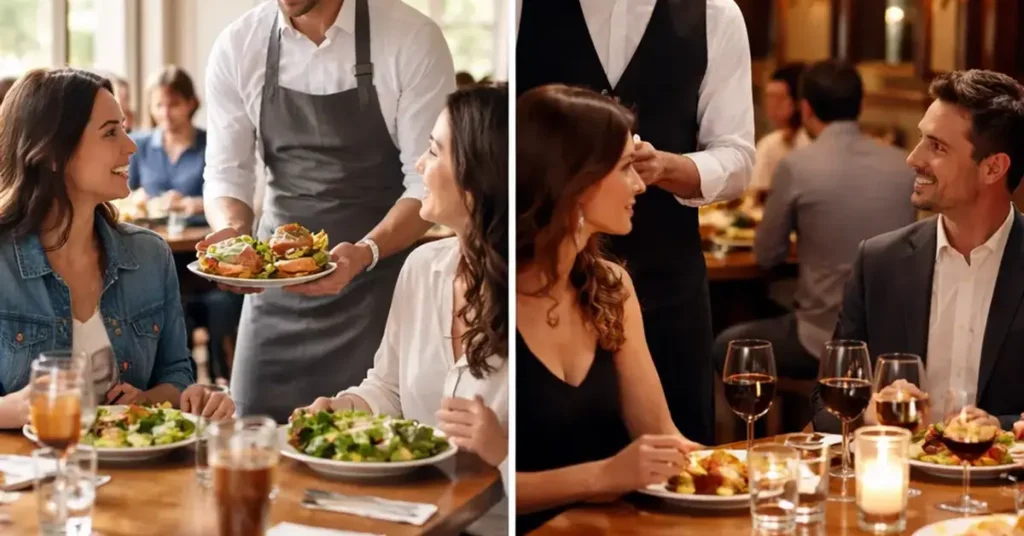
During lunch, the dining room buzzes with natural light, quick conversations, and a sense of purpose. Diners are often on a break from work or errands, which creates a lively but transient energy. By contrast, dinner service trades sunlight for candlelight, quick chatter for lingering conversations, and speed for romance. The same space transforms through lighting, music, and pacing.
Menu Depth and Availability Change by the Hour
Many restaurants offer a condensed lunch menu with smaller portions and fewer options. Signature dishes may appear in lighter versions or be unavailable until evening. In contrast, dinner menus showcase the full range of the chef’s creativity, including prix fixe offerings, seasonal specials, and tableside preparations. If you are after the complete culinary statement, dinner wins every time.
How Service Speed and Quality Differ Between Lunch vs. Dinner Service
Service style is one of the most noticeable differences between these two meal periods. At lunch, servers aim to turn tables quickly, greeting guests promptly and delivering courses in a streamlined flow. At dinner, the same staff shifts into a more polished, attentive rhythm designed to let you savor each moment.
Lunch Service Is Built for Efficiency
Lunch guests typically expect to eat and return to their day within an hour. Servers prioritize speed: taking orders right away, delivering drinks fast, and clearing plates without delay. The pace can feel almost transactional, but it suits the midday crowd perfectly.
Dinner Service Prioritizes Experience Over Speed
Evening service turns dining into theater. The same server may check in more frequently, explain dishes in greater detail, and invite you to linger between courses. Wine service becomes more formal, and pacing slows to allow conversation. For special occasions or a relaxed evening, this intentional rhythm is part of the appeal.
Value and Pricing: Finding the Sweet Spot in Lunch vs. Dinner Service
Price is often the decisive factor for budget-conscious diners. Lunch menus typically feature lower prices because portion sizes are smaller and overhead costs (like lighting and staffing) are lower. Dinner prices reflect the extended menu, larger portions, and elevated ambiance.
| Aspect | Lunch | Dinner |
|---|---|---|
| Average entree price | $12–$20 | $25–$45 |
| Portion size | Smaller, lighter | Full size, often larger |
| Menu variety | Condensed, 8–12 items | Full menu, 15–25+ items |
| Beverage cost | Lower (house wines, soft drinks) | Higher (premium wine, craft cocktails) |
| Overall value | Best for trying the restaurant on a budget | Best for a complete culinary experience |
When Lunch Offers the Better Deal
If you want to sample a restaurant’s cooking without breaking the bank, lunch is your move. Many upscale spots offer lunch specials or prix fixe menus that cost half the dinner price. You get the same kitchen talent at a fraction of the cost. For a related guide, see Bib Gourmand vs Michelin Star: 4 Key Differences for Smart Diners.
When Dinner Is Worth the Splurge
Dinner justifies its higher price through ambiance, service depth, and menu creativity. The same ingredients may be prepared with more elaborate techniques, presented with artistic plating, and paired with a curated wine list. For celebratory meals or first dates, the investment pays off in memorable experiences.
Kitchen Performance: The Hidden Factor in Lunch vs. Dinner Service
The kitchen operates under very different pressures at noon versus night. During lunch, the chef focuses on churning out orders fast, often using prepped ingredients from the morning shift. At dinner, the same kitchen shifts to a more deliberate, artisanal pace—plating is neater, sauces are finished to order, and special requests are handled with more creativity.
Consistency Can Vary Between Meal Periods
Some restaurants shine brighter at one service than the other. A busy lunch rush may lead to occasional mistakes, while a relaxed dinner service allows the kitchen to execute flawlessly. Conversely, an understaffed dinner shift can disappoint—especially on weekends. Reading recent reviews for the specific time you plan to visit is always wise.
Practical Tips for Choosing Between Lunch and Dinner
Before you book, ask yourself these three questions to decide which service fits your needs:
- What is the occasion? Casual catch-up or business meeting → lunch. Anniversary or romantic evening → dinner.
- How much time do I have? Under 90 minutes → lunch. Looking to linger → dinner.
- What is my budget? Trying to stay under $25 per person → lunch. Willing to spend $50+ per person → dinner.
Useful Resources
For deeper insight into how restaurants structure their service periods, check out this guide from Restaurant Business Online on maximizing lunch service success. For a diner’s perspective on timing reservations, visit Eater’s article on the best time to eat dinner.
Frequently Asked Questions About Lunch vs. Dinner Service
Is the food quality different between lunch and dinner at the same restaurant?
Quality is generally the same since the same kitchen staff cooks both services. However, dinner often features more elaborate preparations and plating, while lunch dishes are simpler and faster to execute.
Why are lunch menus usually smaller than dinner menus?
Restaurants streamline lunch menus to speed up service and reduce kitchen workload. Smaller menus also help control food costs during a lower-revenue period.
Can I order dinner items at lunchtime?
Some restaurants allow substitutions, but most reserve dinner-only dishes for evening service. It never hurts to ask politely, but do not expect the full dinner menu at noon.
Is lunch or dinner better for a first date?
Dinner is generally better for first dates because the slower pace and dimmer lighting create a more intimate atmosphere. Lunch works for a low-pressure daytime meeting.
Do servers prefer working lunch or dinner shifts?
Preferences vary. Some servers enjoy lunch for the quicker shifts and lower stress. Others prefer dinner because larger tabs lead to bigger tips.
Are lunch prices always cheaper than dinner prices?
In most full-service restaurants, yes. Lunch entrées typically cost 30–50% less than their dinner counterparts due to smaller portions and fewer courses.
Do restaurants reuse lunch ingredients for dinner?
Yes, many restaurants use the same base ingredients across both services. However, dinner prep often includes additional steps like reducing sauces or trimming proteins more carefully.
Which meal service has better dessert options?
Dinner almost always offers a wider dessert selection, including house-made pastries and plated desserts. Lunch dessert menus are typically limited to simple items like cookies or ice cream.
Is tipping different for lunch versus dinner?
The standard tipping percentage (15–20%) remains the same. However, since dinner bills are higher, the dollar amount tips are usually larger.
Do restaurants offer special lunch promotions?
Many restaurants run lunch specials such as two-course prix fixe menus or discounted beverages to attract the midday crowd. Check the restaurant’s website or social media for current deals.
Which service is better for solo diners?
Lunch is often more comfortable for solo diners because the atmosphere is less formal and you can eat and leave quickly. Dinner solo can feel awkward if the restaurant is very romantic.
Can I make a reservation for lunch at a fine dining restaurant?
Many fine dining restaurants only serve dinner, but some offer lunch on weekends or special occasions. Always check the restaurant’s hours before planning. For a related guide, see Worst Surprise Tasting Menu Mistake: Avoid This Fine Dining Disaster.
How does the noise level compare between lunch and dinner?
Lunch tends to be louder due to the bustling, efficient energy. Dinner is generally quieter, with lower conversation volume and softer background music.
Is the drink list the same for lunch and dinner?
The beverage menu is usually identical, but dinner service encourages more adventurous ordering—full bottles of wine, craft cocktails—while lunch leans toward individual drinks or non-alcoholic options.
Do chefs change the menu between lunch and dinner?
Many chefs modify the menu to reflect ingredient availability and meal appropriateness. Lunch features lighter fare; dinner emphasizes richer, more complex dishes.
Which service has faster table turnover?
Lunch turnover is significantly faster—often 30–45 minutes per table compared to 60–90 minutes for dinner. This affects how rushed you may feel.
Can I celebrate a birthday at lunch?
Absolutely. Many restaurants accommodate celebrations at lunch with cake or a small dessert. Just let the staff know in advance.
Is it easier to get a reservation for lunch or dinner?
Lunch reservations are generally easier to secure, especially at popular restaurants that fill quickly for dinner. Walk-ins are also more common at lunch.
Do restaurants offer to-go options during both services?
Most restaurants offer takeout during both lunch and dinner, but dinner to-go orders may have longer wait times because the kitchen is busier.
How should I decide between lunch and dinner for a large group?
For large groups, lunch is often easier because of lower cost, simpler logistics, and shorter meal durations. Dinner works well for formal group celebrations.