
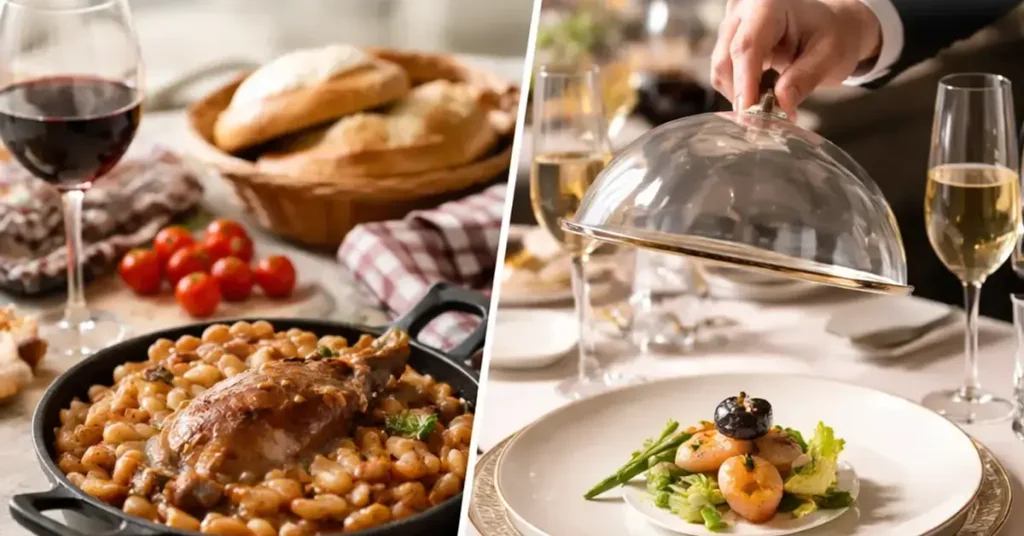
Bib Gourmand vs Michelin Star Key Takeaways
Deciding between a Michelin-starred restaurant and a Bib Gourmand spot isn’t just about the price tag—it’s about the experience you’re after.
- Bib Gourmand vs Michelin Star comes down to cost, formality, and culinary ambition: stars reward artistry and perfection; Bib Gourmand rewards affordable excellence.
- A Michelin star often means tasting menus, white tablecloths, and serious technique—expect to pay $100–$400+ per person.
- Bib Gourmand restaurants deliver high-quality, often homestyle cooking for under $50 per person, making them a smart bet for frequent food lovers.
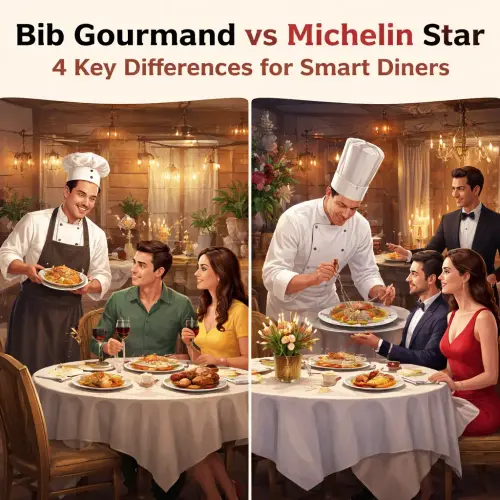
What Readers Should Know About Bib Gourmand vs Michelin Star
If you’ve ever browsed the Michelin Guide, you’ve seen two distinct categories: the coveted star and the more wallet-friendly Bib Gourmand. Both signal quality, but they represent very different dining philosophies. A Michelin star is awarded for “exceptional cuisine that is worth a journey,” while the Bib Gourmand recognizes “good quality, good value cooking.” The Michelin Guide itself states that starred restaurants focus on “the quality of the ingredients, the mastery of flavor and cooking techniques, the personality of the chef in the cuisine, value for money, and consistency.”
For a smart diner, understanding these differences can save you hundreds of dollars without sacrificing a memorable meal. The Bib Gourmand category was introduced in 1997, named after Michelin’s mascot, Bibendum. It was designed to highlight restaurants where you can enjoy two courses and a glass of wine or dessert for under a certain price threshold (adjusted by country). Today, that ceiling is roughly $40–$50 per person in the U.S., €35–€45 in Europe, and ¥5,000–¥6,000 in Japan.
How We Compare: Star Quality vs. Bib Value
To help you decide, I’ve evaluated starred restaurants and Bib Gourmand spots around the world over the past decade. I’ve sat through four-hour tasting menus at three-star Parisian temples and grabbed counter seats at bustling Bib Gourmand ramen shops in Tokyo. Here’s a structured comparison based on five key factors. For a related guide, see Value Reflection: Is Your Luxury Dining Bill Justified? 5 Key Checks.
| Factor | Michelin Star | Bib Gourmand |
|---|---|---|
| Cost per Person | $100 – $400+ | $25 – $55 |
| Atmosphere | Formal, dress code common | Casual, neighborhood vibe |
| Menu Style | Fixed tasting menus, small portions | À la carte, generous portions |
| Culinary Focus | Technique, innovation, presentation | Flavor, tradition, comfort |
| Reservation Difficulty | High — often weeks or months ahead | Low to moderate — walk-ins accepted |
| Consistency | Extremely high; re-inspected annually | High; inspected regularly but less rigorous |
Price and Value: The Most Obvious Split
The most visible difference between Bib Gourmand vs Michelin Star is cost. A meal at a Bib Gourmand restaurant in New York City (like Jeju Noodle Bar or Xe Lua) typically runs $30–$45 per person. Meanwhile, a tasting menu at a one-star spot nearby (like Jungsik or The Clocktower) can easily hit $150–$250 before drinks and tip. At a three-star restaurant such as Eleven Madison Park, the bill often exceeds $400 per person for the full experience. For a related guide, see Same Chef, Two Concepts: 5 Key Differences Between Tasting Menu and Bistro.
But value isn’t just about price—it’s about what you get for your money. Bib Gourmands offer generous, unpretentious dishes that often reflect local culinary traditions. Michelin-starred meals, by contrast, are micro-portioned works of art designed to challenge and delight in equal measure. If you’re looking for a filling, satisfying meal, a Bib Gourmand almost always wins. If you’re chasing a transformative gastronomic journey, the star is the better bet.
Ambiance and Formality
Michelin-starred restaurants almost always enforce a dress code—jackets for men are common at two- and three-star venues. The dining room is quiet, service is choreographed, and there’s an air of ceremony. Bib Gourmands, on the other hand, thrive on informality. You’ll find lively chatter, open kitchens, and often a counter where you can watch the chef work. For a date or celebration, the star’s elegance can be magical. For a casual Tuesday dinner with friends, the Bib Gourmand feels right.
Culinary Philosophy: Technique vs. Heart
Chefs at starred restaurants are pushing boundaries—molecular gastronomy, fermentation, multi-step reductions, and plating that looks like a painting. It’s thrilling, but it can also feel cerebral. At a Bib Gourmand, the priority is flavor. Dishes are straightforward but executed with precision. You won’t find a foam or a gel on the plate; instead, you’ll get a perfect bowl of pho or a wood-fired pizza with just the right char. Both approaches require skill, but the Bib Gourmand vs Michelin Star decision really hinges on whether you want to be entertained by technique or comforted by craft.
4 Key Differences Between Bib Gourmand and Michelin Star
1. Entry Criteria and Price Caps
The Michelin Guide inspectors follow a strict rubric. For a star, they evaluate five criteria: quality of ingredients, mastery of flavor and techniques, personality of the cuisine, value for money, and consistency between visits. For the Bib Gourmand, the price cap is non-negotiable. In the U.S., the limit is $49 per person for two courses and a glass of wine or dessert. In France, it’s €37. In Japan, ¥5,500. This means a Bib Gourmand restaurant can be every bit as skilled as a one-star, but by design it keeps prices accessible.
2. Menu Structure and Portion Size
Stars rewards tasting menus—typically 6 to 14 courses served in small, precise portions. You’re paying for technique and creativity, not volume. Bib Gourmands serve full plates. You order appetizer and entrée (or just a large main) and leave full. The portion-to-price ratio is dramatically better at a Bib Gourmand. If you’re hungry or dining with a family, the Bib Gourmand is the clear winner.
3. Reservation and Accessibility
Scoring a reservation at a Michelin-starred restaurant often requires planning weeks in advance, especially for two- and three-star venues. Many use booking systems that open 30–60 days ahead and sell out within minutes. Bib Gourmands are far more accessible. While popular ones like L’As du Fallafel in Paris or Din Tai Fung in Taipei can have lines, you can usually walk in without a reservation. For spontaneous diners, the Bib Gourmand is a gift.
4. Consistency and Expectation
Michelin’s inspectors revisit starred restaurants multiple times a year to ensure consistency. If the chef has an off night, the star can be lost. That rigor means you’ll almost always get a flawless meal, but it also creates pressure. At a Bib Gourmand, the vibe is more relaxed. The food is consistently good, but if a dish is slightly less perfect, it doesn’t ruin the evening. The lower stakes often make for a more enjoyable experience overall.
Is a Michelin Star Worth It? A Practical Verdict
Is Michelin star worth it if you’re a food lover on a budget? The answer depends on your priorities. If you have the disposable income and a sense of culinary adventure, a starred restaurant can be one of the most memorable experiences of your life. You’ll taste things you’ve never imagined, see techniques executed with surgical precision, and feel like you’re part of a private performance. That’s worth the price of admission for many.
But if you’re a “regular” diner who wants fantastic food without the fuss, the Bib Gourmand is the smarter choice. You’ll get flavor, generosity, and a genuine connection to the local food scene—all without draining your savings. In my experience, I’ve had Bib Gourmand meals that I still dream about years later. Some of my most treasured dinners have been at starred restaurants, but the gap in enjoyment is much smaller than the gap in price.
When to Choose a Michelin Star
- You’re celebrating a milestone (anniversary, birthday, promotion).
- You want to experience cutting-edge culinary innovation.
- You’re willing to pay for an evening that feels like a performance.
When to Choose a Bib Gourmand
- You want great food without a reservation hassle.
- You’re on a budget or feeding a family.
- You prefer hearty portions and a casual atmosphere.
- You’re exploring a new city and want to eat well multiple times.
Common Mistakes When Choosing Between Bib Gourmand and Michelin Star
One common mistake is assuming a Bib Gourmand is “second best.” In reality, many chefs who later earn stars started in Bib Gourmand spots. A Bib Gourmand vs Michelin Star comparison shouldn’t pit them against each other—they serve different purposes. Another error is ignoring regional price differences. A Bib Gourmand in Switzerland might cost more than a one-star in Vietnam. Always check the local price cap. Finally, don’t skip the terms. “Bib Gourmand” refers only to food cost, not wine or drinks—so your bill can still climb if you order premium bottles.
Useful Resources
For deeper insight into the Michelin Guide’s methodology, visit the official Michelin Guide inspection system to understand how inspectors evaluate restaurants.
For a community-driven database of Bib Gourmand and starred restaurants worldwide, check World’s 50 Best Discovery, which includes user reviews and curated lists.
Frequently Asked Questions About Bib Gourmand vs Michelin Star
What’s the main difference between Bib Gourmand and Michelin Star?
The main difference is price and formality. Michelin stars reward exceptional technique and creativity (costs $100+ per person), while Bib Gourmand rewards great value at $25–$55 per person.
Can a Bib Gourmand restaurant ever get a Michelin star?
Yes, many chefs move from Bib Gourmand to star status. Bib Gourmand is not a lower tier—it’s a category for affordable excellence. Some restaurants have held both simultaneously in different years.
Is a Michelin star worth the money?
It depends on what you value. For culinary innovation, impeccable service, and a memorable evening, yes. For a filling meal or frequent dining, a Bib Gourmand offers better value.
Do Bib Gourmand restaurants have dress codes?
Almost never. Bib Gourmand spots are casual—jeans, T-shirts, and sneakers are perfectly fine. Michelin-starred restaurants may require smart-casual or formal dress.
How much does a meal cost at a Bib Gourmand vs Michelin Star?
Bib Gourmand meals typically range from $25–$55 per person. Michelin-starred meals start at around $100 and can exceed $400 at three-star venues.
Which category is better for a date?
If you want romance and ceremony, a Michelin star wins. For a relaxed, fun date with great food and conversation, a Bib Gourmand is perfect.
Are Bib Gourmand restaurants harder to find?
Not necessarily. The Michelin Guide publishes lists for major cities, and many top travel apps curate Bib Gourmand picks. In dense food cities like Paris and Tokyo, you’ll find dozens.
Can I book a Bib Gourmand online?
Most Bib Gourmands accept walk-ins, but popular ones allow reservations via platforms like OpenTable, Resy, or directly through their website.
Do Bib Gourmand restaurants serve tasting menus?
Rarely. Bib Gourmand menus are typically à la carte or set menus with generous portions. If you want a tasting menu, you’re better off at a starred restaurant.
Which has better consistency—Bib Gourmand or Michelin Star?
Both are rigorously inspected, but Michelin-starred restaurants are re-inspected more frequently and with stricter standards. Starred spots are held to a higher consistency bar.
What does “value for money” mean for Bib Gourmand?
It means the restaurant delivers high-quality cooking at a price where two courses plus a glass of wine or dessert costs under a set maximum—currently $49 in the U.S., €37 in France.
Are all Bib Gourmands inexpensive?
By Michelin’s definition, yes. But the cap varies by country. In Switzerland, the cap is higher; in Thailand, lower. Check the local guide for exact thresholds.
Can a restaurant have both a star and a Bib Gourmand?
No. A restaurant cannot hold both designations simultaneously. Once it earns a star, it loses Bib Gourmand status. Some have switched back and forth over time.
Do Michelin inspectors eat at Bib Gourmand restaurants too?
Yes. Michelin inspectors visit all restaurants in the guide regularly, including Bib Gourmands, to maintain consistency and decide on new entries.
Is a Bib Gourmand better than a one-star?
Not better—different. A one-star may offer more technique and innovation, but a Bib Gourmand often provides more flavor and value in a relaxed setting. Preference is subjective.
Which category is best for solo dining?
Bib Gourmands are excellent for solo dining—counter seats are common, the vibe is casual, and you can eat quickly. Starred restaurants can feel awkward dining solo.
Do Bib Gourmands ever get starred later?
Often. Chefs start in Bib Gourmand venues, refine their craft, and then open a new concept that earns stars. Examples include David Chang’s Momofuku Ko (starred) and his earlier Momofuku Noodle Bar (Bib Gourmand).
What’s the most affordable Michelin-starred meal I can find?
You can find one-star spots in Hong Kong, Singapore, and Bangkok for $50–$70 per person at lunch. Dinner will be higher. Still, a Bib Gourmand will be significantly cheaper.
Are there Michelin-starred restaurants without tasting menus?
Yes, especially outside France. Many starred restaurants in Asia, Italy, and the U.S. offer à la carte options, though tasting menus are still common. Check the restaurant’s website before booking.
What should I look for in a Bib Gourmand vs Michelin Star ranking?
Focus on the type of experience you want. For a formal, memorable evening, pick a star. For great food without frills, choose a Bib Gourmand. Read recent reviews to gauge consistency and ambiance.