
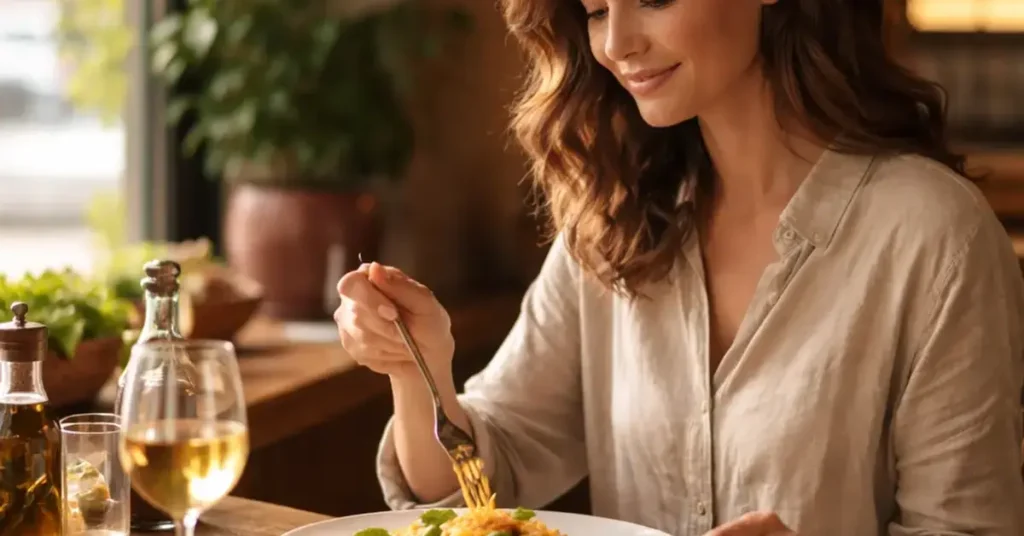
solo diner’s perspective Key Takeaways
Eating alone in a restaurant can feel intimidating at first, but it opens the door to a uniquely personal and liberating experience.
- Adopting a solo diner’s perspective reveals how restaurants treat single guests differently than groups or couples.
- Overcoming the initial awkwardness of eating alone leads to a deeper appreciation of food, atmosphere, and your own company.
- Solo dining is not lonely — it’s a skill that rewards patience, curiosity, and a willingness to embrace the moment.

My First Solo Dinner: A Personal Anecdote
I still remember the first time I walked into a crowded restaurant alone. A hostess greeted me with a puzzled look and asked, “Just one tonight?” Her tone carried a hint of sympathy that I hadn’t expected. I nodded, gripped my bag a little tighter, and followed her to a small table tucked near the kitchen door — a table that seemed to say, “This is where we put the loners.”
But within ten minutes, the discomfort melted away. I ordered a glass of wine, pulled out a dog-eared novel, and started noticing things I never saw when dining with friends: the way the waiter balanced six plates on one arm, the soft jazz playlist that evolved throughout the meal, the subtle garlic aroma rising from the next table’s pasta. By dessert, I felt like I had discovered a secret.
The Solo Diner’s Perspective: What It Really Feels Like
To understand the solo diner’s perspective, you have to separate two things: the fear of sitting alone and the actual experience of doing it. Most people imagine self-consciousness and pitying stares. In reality, the feeling is closer to calm independence. You become a silent observer of the room, not the center of it.
Reclaiming Your Pace
One of the first joys of solo dining is owning your rhythm. You eat when you want, pause to people-watch, and skip the small talk about office politics. There’s no pressure to match someone else’s appetite or conversation style. Every bite becomes intentional.
The Emotional Arc of Eating Alone
For me, solo dining follows a predictable arc: initial self-awareness, a transition into comfort, and finally, a quiet satisfaction. Around the halfway mark of the main course, I stop worrying about how I look chewing and start focusing on the flavors. That’s when the eating alone experience shifts from awkward to empowering.
Restaurants That Welcome the Solo Diner
Not every establishment understands the solo diner’s perspective. Fine-dining places with communal tables and open kitchens tend to be the most inclusive. Casual bistros with bar seating also score high marks, because the bartender often checks in just enough to make you feel seen without hovering.
On the other hand, romantic date-night spots with dim lighting and two-tops can feel exclusionary. I’ve learned to read the room before committing — a quick peek at the entrance tells me if the hostess flinches at the phrase “one for dinner.”
7 Honest Truths About the Solo Dining Experience
After dozens of solo dining review moments, I’ve collected seven truths that every prospective solo eater should know.
1. The First Ten Minutes Are the Hardest
Ordering a small starter or a drink breaks the ice. Once you have something on the table, the ritual feels normal. Use those first minutes to look at the menu or watch the street outside — anything to settle into your own space.
2. Staff Treatment Changes Depending on Your Demeanor
Waitstaff often mirror your confidence. If you smile and order with clarity, they treat you like a valued guest. If you look nervous or apologetic, the service can feel rushed or dismissive. A little confidence goes a long way. For a related guide, see 5 Key Differences Between Lunch vs. Dinner Service – Avoid Costly Mistakes.
3. You Will Become a People-Watching Expert
Without conversation to distract you, the dining room becomes a living theater. You notice the couple on a first date, the family celebrating a birthday, the business traveler scrolling his phone. It’s entertaining and oddly grounding.
4. The Bathroom Break Dilemma
Taking your bag to the restroom every time is impractical, but leaving it unattended feels risky. Most frequent solo diners either sit near the restroom or use a small crossbody bag that never leaves their person.
5. You Can Actually Taste the Food Better
Without chatter, your attention shifts to flavor, texture, and presentation. I’ve noticed that I appreciate the chef’s craftsmanship far more when dining alone. The eating alone experience turns a meal into a meditation. For a related guide, see Bring a Skeptic Review: 7 Honest Reactions to Fine Dining.
6. The Bill Is Always Fair
No awkward splitting, no covering someone else’s expensive glass of wine, no math at the end. You pay for exactly what you consumed, and you tip exactly what you think is fair. It’s one of the cleanest financial transactions in social dining.
7. It Gets Easier with Practice
Like any skill, solo dining improves over time. The first few times feel rehearsed. After a dozen meals, you walk in like you own the place. It becomes a reliable form of self-care.
Comparing Solo Dining Scenarios: A Quick Table
| Scenario | Awkwardness Level | Best For |
|---|---|---|
| Lunch at a café | Low | First-time solo diners |
| Casual dinner with bar seating | Medium | People who enjoy bartender banter |
| Fine dining alone | Medium-High | Experienced solo diners seeking quality |
| Breakfast buffet | Very Low | Anyone — buffet logic erases solo stigma |
Making the Most of Your Solo Diner Experience
To truly master the solo diner’s perspective, treat each meal as an intentional act. Choose a place where you genuinely want to eat. Bring something low-tech like a book or journal, but also allow yourself to look around and absorb the atmosphere. Leave your phone in your pocket for the first fifteen minutes. For a related guide, see Solo Fine Dining: 7 Smart Tips for an Elegant Dinner Alone.
Advanced Tips for Regular Solo Diners
Once you’re comfortable, push yourself to try a dish you’ve never ordered before. Strike up a brief, polite conversation with the server about the wine list. Visit the same restaurant multiple times — the staff will start to recognize you and treat you like a regular.
Useful Resources
For more insight into the solo diner’s perspective, check out these external guides:
Frequently Asked Questions About solo diner’s perspective
Is it weird to eat alone at a restaurant?
Not at all. Millions of people dine alone regularly for business, travel, or personal enjoyment. Once you try it, the stigma fades quickly.
How can I feel less self-conscious when eating alone?
Focus on the food and the environment. Order something you’re excited about, and remind yourself that most people are too busy with their own meals to notice you.
What should I do while waiting for my food?
Read a book, browse your phone, people-watch, or simply enjoy the quiet. Many solo diners journal or plan their day.
Should I sit at a table or the bar when dining alone?
Bar seating is often more comfortable for solo diners because the bartender can serve you faster and you have a natural focal point. A table works if you want more privacy.
How do solo diners handle the bathroom situation?
Take a small bag with you, or ask the server to watch your seat. Most experienced solo diners use a crossbody bag they never take off.
Do restaurants discriminate against solo diners?
Some hostesses may initially seat you near the restroom or kitchen, but polite and confident behavior usually earns you a better table.
Is solo dining more expensive per person?
No — you pay only for what you order. The bill is often lower than splitting as part of a group.
What food is best to order when dining alone?
Anything you love. Avoid dishes that require splitting or sharing. A full meal with a starter and dessert is perfectly fine.
Can solo dining be romantic?
Absolutely. Many solo diners treat themselves to candle-lit dinners with a good book or music. It’s a form of self-love.
How do I overcome the fear of eating alone?
Start small — visit a casual café for coffee and a pastry. Gradually work up to a full meal. The anxiety usually fades after the first ten minutes.
What should I tip as a solo diner?
Standard tipping etiquette applies: 15-20% of the pretax bill. If the service was exceptional, tip more.
Is it safe to leave my phone on the table when I go to the restroom?
It’s better to take it with you. A phone is small enough to pocket, and you avoid the risk of theft or distraction for other diners.
Do solo diners get worse service?
Often the opposite — attentive servers appreciate focused guests. However, some busy waitstaff may forget to check on single tables as often.
How do I handle shared dishes when dining alone?
Order them as your main course. No one will stop you from enjoying a dish designed for two if you eat it yourself.
What if I want to take a photo of my food?
Go ahead — it’s your meal. Keep it quick and discreet to avoid drawing unnecessary attention.
Is it better to dine alone at lunch or dinner?
Lunch is generally more relaxed and lower-pressure for beginners. Dinner offers a more indulgent, atmospheric experience.
Can I make friends while dining alone?
Yes — striking up a conversation with a neighbor or the bartender is common. Solo dining doesn’t mean you have to be silent.
What if the restaurant is busy and there’s a wait?
Single diners often get seated faster than groups. If there’s a wait, step aside and enjoy a drink at the bar until a table opens.
Do solo diners ever get dessert?
Absolutely. Dessert is a great way to extend the experience and reward yourself for stepping out of your comfort zone.
How do I end a solo meal gracefully?
Ask for the check when you’re ready, pay promptly, and thank the staff. A small nod to the hostess as you leave seals the positive impression.