

refuse free meals Key Takeaways
Free meals come with hidden costs — to your health, your autonomy, and your relationships.
- Saying no to free food helps you maintain dietary boundaries and avoid unwanted obligations.
- Most “free” meals are subsidized by advertising, networking expectations, or subpar ingredients.
- A graceful refusal strengthens your reputation as someone who values integrity over convenience.
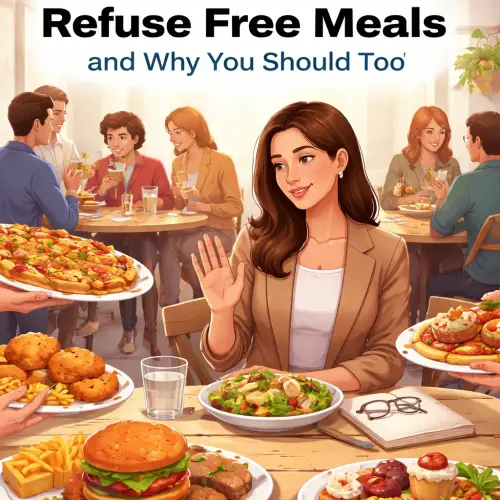
Why I Started to Refuse Free Meals
It started with a lunch meeting that left a bitter aftertaste — literally and figuratively. A vendor had invited me to a steakhouse to “catch up.” The steak was excellent, the wine flowed freely, and the conversation felt warm. But when the bill arrived, the silence that followed was thick. They expected something in return: a favor, a discount, my attention. That meal wasn’t free. It was a transaction wrapped in a napkin.
From that day, I decided to refuse free meals in almost every situation. What seemed like a simple gesture often carried strings I wasn’t willing to pull. Over time, I’ve refined my approach and discovered seven compelling reasons to say no. For a related guide, see 7 Expert Drink Pairing Mistakes to Avoid in Any Beverage Program.
1. The Hidden Cost of “Free” Food
Nothing in life is truly free, and meals are no exception. When someone offers to pay for your meal, they often expect something in return — a business referral, a positive review, or simply your goodwill. The ethics of accepting free food become murky when reciprocity isn’t discussed upfront.
Even among friends, a free meal can create an unspoken imbalance. You may feel indebted, which subtly changes the dynamic. By choosing to refuse free meals, I keep my relationships clean and my conscience clear. For a related guide, see 5 Smart Rules I Use to Choose Restaurants for Review.
The Psychology of Obligation
Psychologists call it the principle of reciprocity. When someone does something nice for us, we feel an automatic urge to return the favor. Marketers and salespeople exploit this all the time. A free appetizer, a complimentary drink — these aren’t generosity; they’re tools.
2. Health and Dietary Autonomy
Free meals are rarely designed with your health in mind. They’re usually heavy, calorie-dense, and loaded with sugar, salt, and unhealthy fats. When I refuse free meals, I take back control of what goes into my body. For a related guide, see The Cost of Being Unsponsored: 5 Risky Mistakes to Avoid.
I follow a specific eating plan for my energy and digestion. A free buffet at a conference or a catered lunch at a client meeting almost never aligns with that plan. Saying no isn’t rude — it’s self-respect.
The Buffet Trap
Buffets, in particular, encourage mindless overeating. The psychology of “getting your money’s worth” kicks in, even when you haven’t paid a cent. By refusing the offer entirely, I sidestep the temptation entirely.
3. Financial Independence in Social Settings
Ironically, accepting free meals can hurt your finances indirectly. When someone buys your dinner, you may feel pressured to reciprocate with a more expensive gift or favor later. The total cost of maintaining that balance can exceed the price of the original meal.
I prefer to pay my own way. That’s why I often refuse free meals and suggest splitting the bill instead. It may be unconventional, but it saves me money — and awkwardness — in the long run.
4. Protecting Personal and Professional Integrity
In business, free meals can blur boundaries. Journalists, government employees, and procurement officers often have strict rules against accepting gifts from vendors. Even if your industry doesn’t prohibit it, accepting a meal can create the appearance of bias.
I once saw a colleague lose a promotion because people perceived him as being “bought” by a supplier who regularly treated him to lunch. It wasn’t true, but perception is reality. I’d rather refuse free meals than risk my reputation.
When It’s a Gift, Not a Bribe
Of course, not every free meal carries strings. My grandmother offering Sunday dinner is different from a lobbyist buying lunch. The key is intention. But unless I’m certain of pure generosity, I err on the side of caution.
5. Environmental and Ethical Food Choices
Free meals often come from large-scale caterers who prioritize cost over sustainability. The ingredients may be genetically modified, industrially farmed, or sourced unethically. When you refuse free meals, you vote with your wallet for better food systems.
I try to eat locally sourced, organic, and ethically raised food. That’s hard to do when your meal is provided by a commercial kitchen that buys in bulk. By declining, I avoid supporting practices I don’t believe in.
6. Time and Opportunity Costs
A free meal is never just a meal. It’s usually part of an event — a networking lunch, a demo day, a client dinner — that eats up your time. Time you could spend on work, family, or rest.
When I refuse free meals, I reclaim that time. Instead of sitting through a two-hour sales presentation over mediocre pasta, I can focus on what matters. My time is more valuable than any free entree.
The Dinner Meeting Dilemma
Even informal dinner meetings can drag on. A free meal often comes with social pressure to stay, make small talk, and be agreeable. If the conversation isn’t productive, you’ve traded your evening for a plate of food you didn’t choose.
7. Modeling Healthy Boundaries for Others
When I refuse free meals gracefully, I set an example. Friends, family, and colleagues see that it’s possible to say no without causing offense. I’ve inspired more than one friend to start speaking up when a “free” offer didn’t feel right.
Boundaries are contagious in the best way. Every time I politely decline, I give someone else permission to do the same. That’s a gift worth far more than a free lunch.
How to Say No Graciously
It’s not about being rude. A simple “Thank you, but I’ll cover myself — I like to keep things clean” works wonders. Most people respect the honesty. If they don’t, that’s a red flag worth noticing.
Useful Resources
- Psychology Today: The Principle of Reciprocity — understand the science behind why free gifts create obligation.
- BBC Worklife: The Hidden Costs of a Free Lunch — explore real-world examples of how free meals affect professional relationships.
Frequently Asked Questions About refuse free meals
What does it mean to refuse free meals ?
It means politely declining offers of food that someone else pays for, whether in business, social, or family settings, to maintain autonomy and avoid hidden obligations.
Is it rude to refuse free meals ?
Not if done graciously. A polite explanation like “I prefer to keep things even” is usually respected. It becomes rude only if you make a scene or insult the host.
Why refuse free meals at work?
To avoid conflicts of interest, maintain professional boundaries, and stay in control of your diet. Many workplace free meals come with unspoken expectations.
Does refusing free meals save money?
Indirectly yes. By avoiding reciprocal obligations, you prevent future spending and keep your relationships balanced, which saves money over time.
How do I refuse free meals without offending?
Smile, thank them sincerely, and say “I appreciate it, but I’ll take care of mine — it helps me stay disciplined.” Keep it light and firm.
Can refusing free meals improve my health?
Yes. Free meals are often unhealthy and encourage overeating. Declining gives you control over ingredients and portions.
What about free meals from family?
Different context. Family meals are usually genuine gifts. Still, if a pattern of obligation emerges, you can politely set boundaries there too.
Should I refuse free meals on dates?
It’s a personal choice. Some prefer to split to avoid implied expectations. Others accept as a gesture. Reflect on your comfort level.
Is refusing free meals antisocial?
No. Many social gatherings revolve around food, but you can still participate without accepting a free meal — offer to pay your share.
Do I have to explain why I refuse free meals ?
Not always. A simple “No, thank you” suffices. Only offer explanation if asked or if the relationship warrants it.
How do I refuse free meals at conferences?
Say “I’m going to grab something on my own — I need a break anyway.” This is socially acceptable and gives you control.
Can refusing free meals hurt my career?
Rarely. Most colleagues respect your choices. Only in very hierarchical cultures might it be seen as odd, but integrity usually wins long-term.
What if the free meal is from a friend?
Accept if it’s a genuine gift. But if you sense obligation, offer to pay next time or suggest an activity that doesn’t revolve around food.
Does refusing free meals relate to minimalism?
Yes. Minimalists often refuse free items to avoid clutter — physical and relational. A free meal can clutter your schedule and social life.
How do I handle free meals in cultures where it’s rude to refuse?
Accept the gesture, but reciprocate in a non-food way — a small gift or a thank-you note. You participate without building ongoing obligation.
Are there times when it’s okay to accept free meals?
Absolutely — when the offer is clearly unconditional, from a close friend or family, and aligns with your diet and values. Not every free meal is a trap.
What if someone insists I take a free meal?
Stand firm politely. “I really appreciate it, but I’ll have to pass.” If they persist, a lighthearted “You’re too generous, but my doctor would kill me” can work.
Can refusing free meals help with weight loss?
Yes. Restaurant meals are calorie-dense. By refusing, you avoid unplanned calories and stay aligned with your meal plan.
Should I refuse free meals from clients?
Yes, if you want to maintain a purely professional relationship. Offer to treat them instead, or keep the meeting in an office setting.
How do I teach my kids to refuse free meals ?
Model the behavior. Explain that “sometimes people offer things because they want something back.” Role-play polite refusals.