
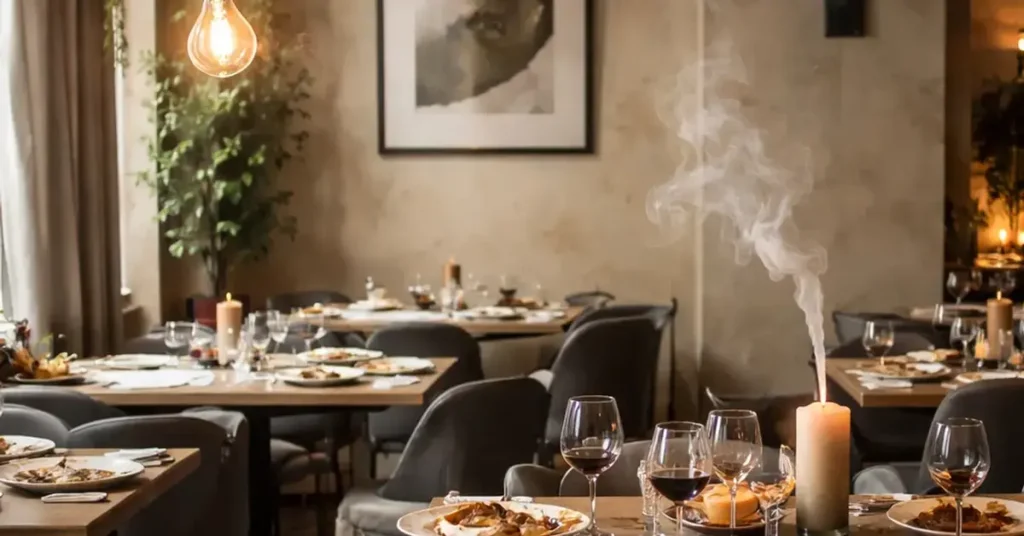
Ambience and Interior Design Mistakes Key Takeaways
Hard surfaces—concrete floors, exposed brick, metal tables—look modern but turn every conversation into a roar.
- Poor interior design lighting choices create glare and fatigue; layered fixtures solve this.
- Ignoring restaurant acoustics drives customers away; soft surfaces and baffles restore comfort.
- Overlooked table spacing design and disjointed art direction interior elements break immersion, while scent marketing can anchor a brand memory.
Why Ambience and Interior Design Mistakes Hurt Your Business
Ambience is not a luxury; it is a business driver. When guests walk into a space, their subconscious registers lighting, noise, distance between tables, art, and smell within seconds. If any of those elements clash, the experience feels off—and people leave sooner, spend less, and rarely return.
Yet many owners and designers repeat the same patterns because they focus on looks alone. The real secret is that ambience design is sensory orchestration. Every detail either supports or sabotages the mood you want to create.
Mistake #1: One-Dimensional Interior Design Lighting
A single overhead light source creates harsh shadows and flat, unflattering illumination. This is by far the most common interior design lighting error in restaurants, retail spaces, and even homes.
The Three-Layer Solution
Layer ambient (general), task (focused), and accent (highlight) lighting. Use dimmers on every circuit so you can shift the mood from bright and energetic during lunch to intimate and cozy at dinner.
Color Temperature Matters
Warm bulbs (2700K–3000K) feel welcoming and soften skin tones. Cooler light (4000K+) creates a clinical vibe. Mixing kelvin temperatures in the same room looks amateurish—stick to one range throughout the space.
Mistake #2: Ignoring Restaurant Acoustics
Hard surfaces—concrete floors, exposed brick, metal tables—look modern but turn every conversation into a roar. Poor restaurant acoustics is the number one complaint in online reviews for bars and eateries.
Sound-Soaking Fixes That Look Good
Acoustic panels can be covered with fabric art. Carpet under tables absorbs foot noise. Upholstered banquettes and curtains dampen echo. Even a strategically placed bookshelf breaks up sound waves.
When Noise Becomes a Feature
A lively buzz is fine; a painful din is not. Measure decibel levels next time your space is full. If the meter hits 80 dB or above during a normal meal, your acoustics need an intervention.
Mistake #3: Cramped or Chaotic Table Spacing Design
Squeezing an extra table into the floor plan might boost short-term revenue, but it destroys guest comfort. Poor table spacing design makes servers bump chairs and forces diners to hear strangers’ conversations.
The 18-Inch Rule
Allow at least 18 inches between the edge of one table and the back of the chair behind it. For banquette seating, add 6 inches of personal space on either side. Measure your room and work backward from the ideal layout, not from maximum capacity.
Flow and Server Access
Draw a path from kitchen to every table. If servers must twist sideways or ask guests to move, your spacing is wrong. Create clear, wide arteries even if it means removing one table.
Mistake #4: Forgettable Art Direction Interior
Blank walls feel sterile, but random frames and generic prints feel cheap. Strong art direction interior choices tell a story about your brand without using words.
Curate, Don’t Decorate
Select artwork that reflects your concept—local photography for a regional spot, abstract pieces for a modern lounge. Commission or buy from real artists rather than big-box retailers.
Scale and Placement
A single 12×18-inch picture on a large wall looks lost. Go big, group pieces in odd numbers, or use a gallery wall. Place art at eye level, approximately 57–60 inches from the floor to the center of the piece.
Mistake #5: Overpowering or Absent Scent Marketing
Smell bypasses logic and triggers memory directly. Yet many spaces either douse guests in synthetic fragrance (headache territory) or leave unpleasant kitchen odors unchecked.
Choose a Signature Scent That Fits
Citrus and green tea work for cafes; cedar and vanilla suit a whisky bar. Subtle is better—the scent should be noticed only when someone mentions it. Essential oil diffusers with timer settings give you control without overspray.
Eliminate Negative Odors First
Before adding a fragrance, deep-clean carpets, vents, and upholstery. An air purifier with a carbon filter removes cooking smells. Neutral smell is better than a bad perfume layered on top of a worse smell.
Mistake #6: Using Ambience Design That Fights Itself
Each element should repeat the same emotion. A cozy warm light clashes with a cold blue wall. Acoustic panels in a minimalist room look out of place unless styled intentionally.
Create a Sensory Mood Board
Write down three words that describe the feeling you want—“cozy,” “energetic,” “luxurious,” etc. Test every lighting choice, material, sound level, and scent against those words. If it doesn’t match, remove it.
Consistency Over Surprise
One unexpected element can be a delightful accent. Two or three unrelated surprises just feel confusing. Keep 80% of the room in total harmony and use 20% for creative tension.
Mistake #7: Designing Without Testing the Reality
Renderings and mood boards never capture how a space feels at 8 p.m. on a busy Saturday. The final mistake is not testing the finished room with real people.
Run a Soft Opening Audit
Invite friends or industry peers and ask for specific feedback: “Was it easy to talk? Could you see the menu? Did anything smell unusual?” Take notes and adjust before the public launch.
Keep Evolving
Seasonal changes, new menu items, and customer demographics shift over time. Revisit your ambience design every six months. Refresh art, tweak lighting direction, and update your scent profile if needed.
Useful Resources
For deeper reading on sensory design and acoustic treatments, check out these professional guides:
- ArchDaily: The Importance of Acoustic Design in Restaurants – expert insights on sound absorption and space planning.
- Retail TouchPoints: The Psychology of Scent Marketing – real-world cases and best practices for brand-specific fragrance strategies.
Frequently Asked Questions About Ambience and Interior Design Mistakes
What are the most common Ambience and Interior Design Mistakes ?
The most frequent errors include one-dimensional lighting, ignoring acoustics, poor table spacing, random art, mismatched scents, and designing without real-world testing.
How do I choose the right interior design lighting for a restaurant?
Layer ambient, task, and accent lighting. Use warm white bulbs (2700K–3000K) on dimmers to transition from day to night seamlessly.
Can restaurant acoustics be fixed without major renovation?
Yes. Add acoustic panels covered in fabric, install carpet or rugs, use upholstered seating, and place bookshelves or plants to break up sound reflections.
What is the ideal table spacing design for comfort?
Allow at least 18 inches between table edge and the chair behind it, and 6 inches of personal space beside each seat for banquettes.
How do I develop a consistent art direction interior ?
Select artwork that reinforces your brand story. Go local or commission original pieces, use proper scale, and hang at eye level (57–60 inches to center).
Is scent marketing effective in small spaces?
Yes. A subtle, consistent scent can improve brand recall, but keep it light—use a timer-controlled diffuser with pure essential oils.
What is the number one lighting mistake in interior design?
Relying on a single overhead light source without dimmers or accent layers. It creates flat, uncomfortable illumination.
How do I fix bad acoustics in an open-plan space?
Use suspended baffles, wall panels, soft furniture, and sound-absorbing window treatments. Even a large area rug helps significantly.
Does table spacing affect customer satisfaction?
Absolutely. Tight spacing increases noise and reduces privacy, leading to shorter stays and lower average spending per visit.
What are good resources for art direction interior inspiration?
Visit local galleries, browse Pinterest boards aligned with your brand, and consult interior designers who specialize in commercial hospitality.
How many scents should I use in one venue?
Stick to one signature scent per zone to avoid confusion. A single note (e.g., clean linen or subtle citrus) works best.
What color temperature is best for restaurant lighting?
Warm 2700K–3000K is standard. Cooler light can feel sterile but might work for fast-casual breakfast spots.
How do I measure restaurant acoustics ?
Use a smartphone decibel meter app during peak hours. Levels above 75–80 dB indicate a problem.
Should I match art to my furniture style?
Yes, but aim for complementary contrast. A modern space can handle a single vintage piece as a focal point, but keep the majority cohesive.
Can scent marketing improve staff mood too?
Yes. Subtle citrus or peppermint can boost alertness, while lavender in break areas promotes calm. Adjust by zone.
How do I test my ambience design before opening?
Run a soft-opening with friends or industry peers who are honest. Ask specific questions about noise, comfort, and scent.
What is the fastest way to improve ambience on a budget?
Change lighting to warm dimmable bulbs, add one area rug, move tables farther apart, and remove any artificial air fresheners that compete.
Do I need a designer to fix Ambience and Interior Design Mistakes ?
Not necessarily—start with the fixes in this article. If the problem persists, hire a specialist for acoustic or lighting design. For a related guide, see Hello world!.
How often should I update my interior design?
Refresh art and scent seasonally. Major renovations depend on wear and concept changes, but a full redesign every 5–7 years is typical.
What is the one rule for ambience design success?
Keep every sensory element aligned with your brand feeling. If it doesn’t fit, don’t include it.