
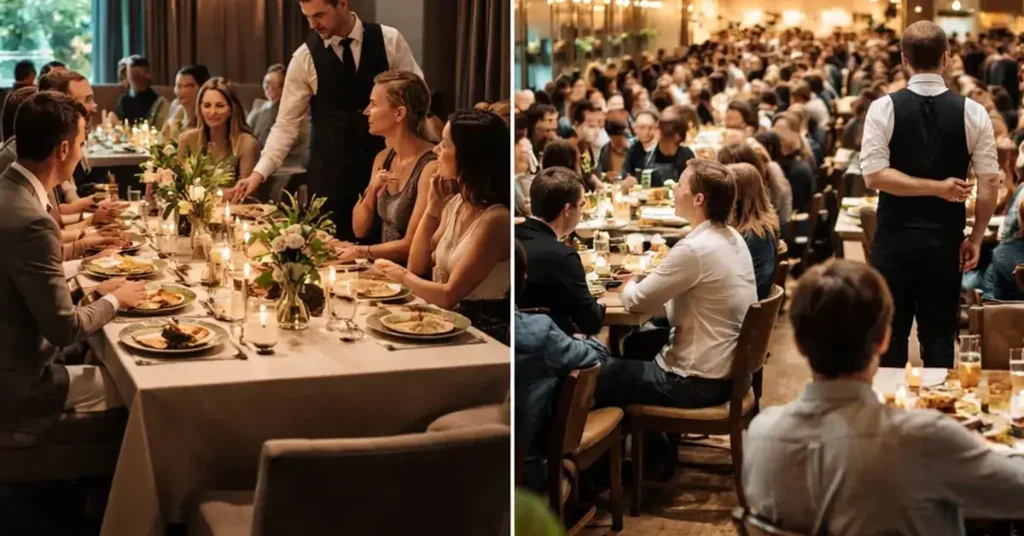
private dining room vs main dining hall Key Takeaways
Choosing between a private dining room vs main dining hall comes down to the atmosphere you want to create.
- A private dining room vs main dining hall comparison shows that private spaces reduce ambient noise by up to 70% for more focused conversations
- Exclusivity allows for customized menus, dedicated waitstaff, and décor that aligns perfectly with your event theme
- Business diners report higher deal success rates in private rooms because confidentiality builds trust
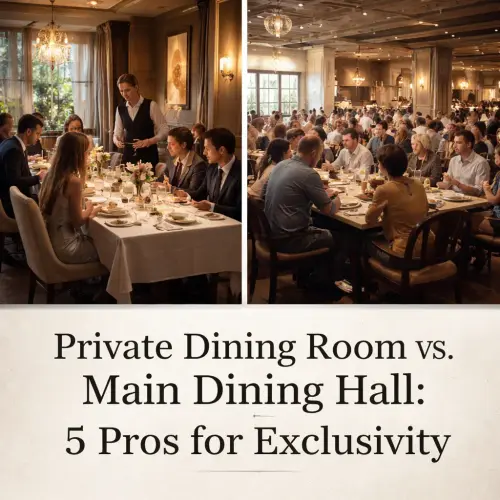
Why the Private Dining Room vs Main Dining Hall Decision Matters
I remember sitting in a bustling downtown steakhouse last winter, trying to close a deal with a potential investor. The main dining hall hummed with laughter, clinking glasses, and the sizzle of the open kitchen. Every time I leaned in to make a key point, a server appeared to refill water or a nearby table erupted in birthday cheers. We got the deal done, but it took twice as long as it should have and felt fractured. Later that week, I hosted a small anniversary dinner for my parents in a private room at a different restaurant. The difference was night and day — we controlled the music, the lighting, and the pace of service. That experience made me a true believer in the power of exclusivity. For a related guide, see 5 Key Differences Between Lunch vs. Dinner Service – Avoid Costly Mistakes.
This private dining room vs main dining hall decision affects more than just seating. It shapes how your guests feel, how your event flows, and even how people remember the occasion. Whether you are planning a milestone birthday, a corporate board meeting, or an intimate wedding reception, the choice sets the emotional tone for the entire gathering.
5 Ways Exclusivity Changes the Private Dining Room vs Main Dining Hall Experience
1. Acoustics and Conversation Flow
The main dining hall is designed for energy. Open kitchens, live music, and multiple conversations create a vibrant hum that many diners love. But for a focused discussion, that energy becomes noise. In a private dining room vs main dining hall, the acoustic difference is dramatic. Private rooms often have carpet, heavy drapes, and sound-absorbing panels that soften voices. You can hold a conversation at a normal volume without strain.
Pro tip: Ask the venue about the room’s construction. A room with solid walls (not temporary partitions) offers better sound isolation. Some high-end private spaces, like those in Michelin-starred restaurants, even have sound-dampening ceiling tiles designed for confidentiality.
2. Service Personalization and Attention
In the main dining hall, your server rotates across multiple tables. They are efficient, but their attention is divided. In a private room, you often receive a dedicated captain and a team that focuses solely on your party. This level of service allows for personalized wine pairings, custom menus with dietary modifications, and timing that matches your agenda rather than the kitchen’s rush.
Real example: At Bern’s Steak House in Tampa, the private wine rooms come with a sommelier who guides the entire tasting journey. Guests who have dined both in the main hall and the private rooms consistently praise the heightened attentiveness in the exclusive spaces. The service team learns your preferences before you arrive and adjusts courses to the pace of your conversation.
3. Customization of Ambiance and Décor
When you choose a private dining room vs main dining hall, you gain the ability to shape the environment. In the main hall, the restaurant’s brand dominates — the lighting, music, and artwork are fixed. In a private room, you can bring floral arrangements, adjust the thermostat, request specific playlist volume, and even project a presentation or slideshow on the room’s screens.
Case in point: A couple I know hosted their engagement dinner in a private room at a French bistro. They brought in personal photographs, changed the table linens to match their colors, and had a small cake waiting. The staff allowed them an extra hour without pressure because the room was booked for the evening. In the main hall, that level of customization would have been impossible — you cannot rearrange a public space for one party without affecting other diners.
4. Confidentiality and Trust Building
For business meetings, legal discussions, or sensitive family conversations, confidentiality is paramount. In the main dining hall, nearby tables can overhear hushed negotiations. In a private room, you control who enters and when. This privacy builds trust and allows participants to speak freely without self-censoring.
Research from the Journal of Business Venturing highlights that entrepreneurs who hold funding discussions in private dining environments are more likely to reach verbal agreements because the setting signals professionalism and discretion. The private dining room vs main dining hall choice directly impacts the psychological safety of the conversation.
5. Perceived Value and Event Memorable
An exclusive setting elevates how guests perceive the event. It signals that the host invested thought and resources into creating a special experience. After a dinner in a private room, guests remember not just the food, but the feeling of being personally welcomed and cared for. In the main dining hall, the memory blends into other restaurant visits. For a related guide, see Worst Surprise Tasting Menu Mistake: Avoid This Fine Dining Disaster.
Data point: Restaurants that offer private dining report 30% higher per-guest spending compared to their main hall sections, not because prices are higher, but because guests order more courses, premium wines, and add-ons when they feel the occasion is unique. The exclusivity encourages indulgence.
How to Decide Between a Private Dining Room vs Main Dining Hall
Step 1: Define the Event Purpose
Ask yourself: what is the primary goal? If it is celebration and energy, the main hall may work. If you need focus, intimacy, or discretion, lean toward the private room. Write down the top three outcomes you want — this clarity will guide every other decision.
Step 2: Assess Your Guest List Dynamics
A diverse group of extroverts might love the buzz of the main hall. A mixed group with introverts, children, or elderly guests often benefits from a quieter, more controlled private setting. Consider the loudest talker and the quietest listener — the private room balances both.
Step 3: Evaluate Budget and Minimums
Private rooms often require a food and beverage minimum rather than a rental fee. Compare that minimum to what you would naturally spend in the main hall. Sometimes the numbers are surprisingly close, and the added value of exclusivity is essentially free. Always ask about service charges and gratuity policies before booking.
Step 4: Tour Both Spaces at the Same Time of Day
Visit the restaurant during the time you plan to dine. A main hall that sounds peaceful at 4 p.m. can be deafening at 8 p.m. Similarly, a private room with poor ventilation might feel stuffy. Experiencing both in real conditions reveals the true advantages of a private dining room vs main dining hall for your specific hour.
Risks and Safeguards When Booking a Private Dining Room
Exclusivity is not without potential downsides. Some private rooms feel cramped, isolated, or disconnected from the restaurant’s energy. To safeguard against disappointment:
- Ask about room visibility: Some rooms are windowless — ensure at least one window or glass partition to avoid a claustrophobic feel.
- Confirm audio-visual equipment: If you need a screen or microphone, test it during the tour. Do not assume it works.
- Check the cancellation policy: Private spaces often have stricter cancellation windows than the main hall. Get everything in writing.
- Request a pre-event menu tasting: This ensures the kitchen can handle your group’s preferences and dietary restrictions before the actual event.
Useful Resources
For more detailed information on planning private dining events and understanding venue contracts, these resources are excellent starting points:
- National Restaurant Association — Private Dining Trends — Official data on how restaurants are investing in private spaces and what consumers prefer.
- The Balance Small Business — Private Dining Event Planning Guide — Practical checklist from budgeting to post-event follow-up, helpful for first-time hosts.
Ultimately, the private dining room vs main dining hall decision is about matching the setting to your event’s soul. If you want energy, spontaneity, and the pulse of a vibrant space, the main hall delivers. If you seek intimacy, personalization, and an elevated sense of occasion, the private room transforms the experience into something unforgettable. Listen to your group, trust your instincts, and choose the space that lets your gathering shine. For a related guide, see 7 Must-Know Secrets for a Flawless Restaurant Launch Event.
Frequently Asked Questions About private dining room vs main dining hall
What is the main difference between a private dining room and a main dining hall ?
The main difference is exclusivity. A private dining room is a separate, enclosed space reserved solely for your group, offering customized service, controlled ambiance, and privacy. The main dining hall is an open, shared space where you dine alongside other guests with standard service.
Is a private dining room more expensive than the main hall?
Typically yes, but not always. Private rooms often have a minimum spend on food and beverages which can be higher than an average meal in the main hall. However, if your party naturally orders generously, the difference might be minimal. Always compare the minimum to your expected spend.
Can you order from the regular menu in a private dining room ?
Most restaurants allow you to choose from the regular menu or a pre-fixe menu designed for private events. Some high-end venues require a pre-selected menu to streamline kitchen operations. Clarify this during booking.
Do private dining rooms have better service?
Generally yes. Private rooms often come with a dedicated captain, sommelier, or team that focuses exclusively on your table. This leads to more attentive, personalized service compared to the shared attention in the main hall.
How many guests do you need for a private dining room ?
Requirements vary widely. Some restaurants offer private spaces for as few as six guests, while others require a minimum of 20 to 30. Smaller restaurants may have rooms that accommodate 10 to 15 people. Check the venue’s policy.
Can you bring decorations into a private dining room ?
Most restaurants allow reasonable decorations like centerpieces, balloons, or banners, but they may prohibit confetti, open flames, or anything that damages surfaces. Always confirm décor policies and ask if they provide basic table settings.
What is a typical noise level in a private dining room ?
Noise levels in private rooms are significantly lower, often by 60-70%, because the space is enclosed and sound-treated. You can converse at normal volume without shouting. This is one of the top reasons people choose exclusivity.
Are private dining rooms good for business meetings?
Excellent for business meetings. The privacy allows for confidential discussions, and the controlled environment minimizes interruptions. Many executives prefer private rooms for negotiations, board dinners, and client entertainment.
Can children be in a private dining room ?
Yes, private rooms are often ideal for families with children because the enclosed space lets kids move around without disturbing other diners. Some venues offer childcare-friendly amenities like high chairs and kid’s menus in private spaces.
How far in advance should I book a private dining room ?
Popular venues book private rooms 3 to 6 months in advance, especially for holiday parties or weekends. For weekday dinners, 2 to 4 weeks of notice is often sufficient. Book as early as possible to secure your preferred date and room size.
Do private dining rooms have windows?
It varies. Some private rooms are interior spaces without windows to maximize sound isolation, while others have glass doors or large windows overlooking the main dining area or outdoor scenery. Ask during your tour if natural light is important to you.
What is the cancellation policy for private dining rooms?
Policies differ by venue. Many require 48 to 72 hours notice for cancellations to avoid a penalty, which could be a percentage of the minimum spend. Some high-demand rooms have non-refundable deposits. Read the contract carefully.
Can I request a specific server for my private dining event?
Yes, many restaurants accommodate requests for specific servers, especially if you have a positive history with that staff member. Mention this during the booking process. The venue will do its best to assign your preferred team.
Are private dining rooms worth the extra cost for intimate celebrations?
For milestone birthdays, anniversaries, or proposals, the answer is almost always yes. The personalized atmosphere, dedicated service, and memory-making potential justify the investment. For casual dinners with close friends, the main hall may suffice.
Do private dining rooms have audio-visual equipment?
Many do, but the quality varies. Some rooms have built-in projectors, screens, and sound systems. Others have only basic HDMI connections. Always verify the equipment specifications and test them before your event, especially for presentations.
Can you smoke in a private dining room ?
No. In nearly all jurisdictions, indoor smoking is banned in restaurants, including private rooms. Most venues also prohibit e-cigarettes and vaping indoors. Designated outdoor smoking areas may be available, but not inside the private space.
How does tipping work for private dining events?
Most private dining contracts include an automatic gratuity, typically 18% to 22% of the total bill. This covers the service team. Check if your contract includes this or if you need to add it manually. You can also tip extra for exceptional service.
Are private dining rooms accessible for wheelchairs?
Many modern venues ensure their private dining areas are fully accessible, with wide doorways, no steps, and accessible restrooms nearby. However, older buildings may have limitations. Always ask about accessibility when booking to avoid surprises.
What is the typical minimum spend for a private dining room ?
Minimum spends vary greatly by city and restaurant prestige. In mid-range restaurants, you might see $500 to $1,500 minimums for small groups. High-end venues in major cities can require $3,000 to $10,000 or more. This minimum typically includes food and beverages before tax and tip.
Can you hold a hybrid (in-person and virtual) event in a private dining room ?
Yes, but you must check the venue’s Wi-Fi strength and layout for camera placement. Some private rooms now come equipped with built-in cameras and microphones for hybrid events. If this is important, request a technology test run before the event day.