
ALE Score Key Takeaways
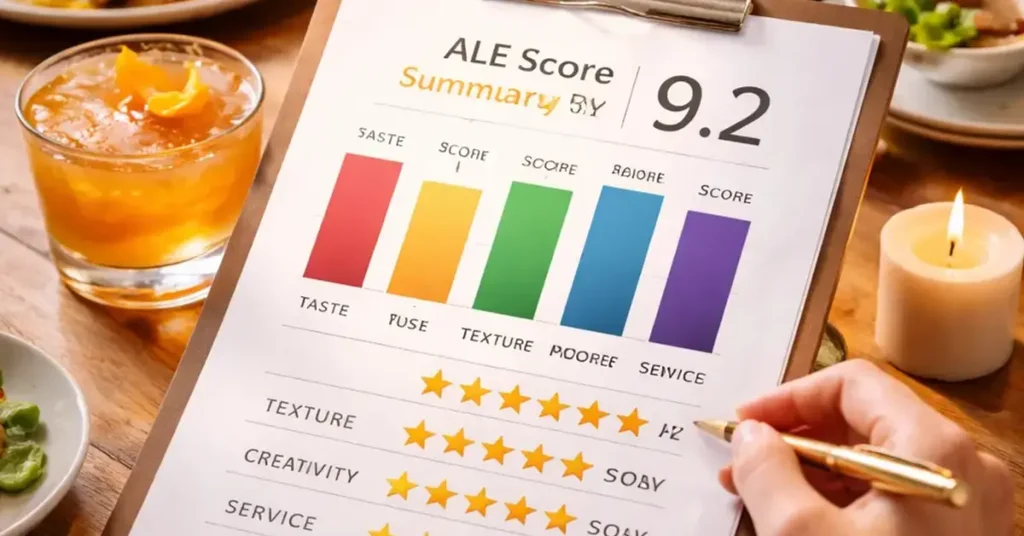
The ALE Score combines five essential pillars—taste, texture, creativity, service, and ambience—into one clear rating that helps you decide where to eat or which dish to try next.
- The ALE Score offers a balanced 5‑pillar rating system that goes beyond just flavor.
- Taste and texture carry the most weight, but creativity, service, and ambience add crucial context.
- Use the score to compare dining experiences and set expectations before you visit.
What the ALE Score 5‑Pillar Rating Really Means
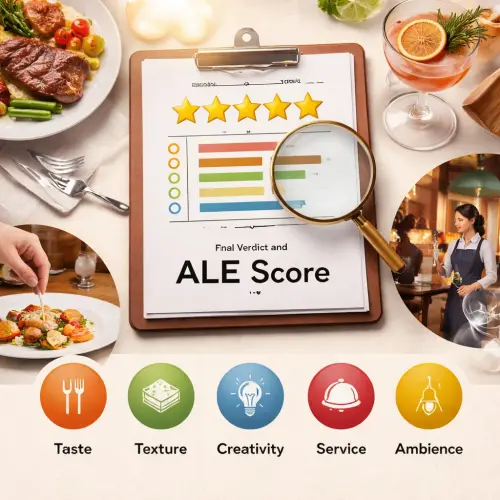
Every meal is more than the sum of its ingredients. That is exactly why the ALE Score exists. Instead of a single vague star rating, this method breaks down your experience into five distinct pillars: taste, texture, creativity, service, and ambience. Each pillar receives a score from 1 to 10, and the final ALE Score is the weighted average. This gives you a transparent, actionable verdict every time. For a related guide, see Service Flow and Timing: 5 Proven Strategies for Better Course Pacing.
How the ALE Score Weighs Each Pillar
Not every pillar carries the same importance. Taste always leads the pack, followed closely by texture. Creativity, service, and ambience add depth but do not overpower the core eating experience. Here is the typical weight distribution:
| Pillar | Weight | Why It Matters |
|---|---|---|
| Taste | 30% | The primary reason you eat—flavor balance, seasoning, and memorability. |
| Texture | 25% | Mouthfeel, consistency, and how the food holds together on the plate and in the mouth. |
| Creativity | 20% | Originality of the dish, presentation flair, and unexpected combinations. |
| Service | 15% | Attentiveness, speed, knowledge, and warmth of the waitstaff. |
| Ambience | 10% | Lighting, music, decor, and overall atmosphere that sets the mood. |
Breaking Down Each Pillar for a Complete ALE Score
To understand your final ALE Score, you need to know what each pillar measures. Let us walk through them one by one.
Taste: The Foundation of the ALE Score
Taste is nonnegotiable. Whether sweet, savory, salty, bitter, or umami—every dish should deliver a clean, intentional flavor profile. A high taste score means the chef balanced these elements without overdoing any one note. If the dish leaves you craving another bite, taste is doing its job.
Texture: What the Mouth Feels
Texture often separates a good dish from a great one. Think of the crunch of a well-seared crust, the creaminess of a silky sauce, or the tender pull of braised meat. A low texture score usually signals inconsistency—soggy bread, grainy sauces, or rubbery proteins.
Creativity: The Surprise Factor
Creativity does not mean reinventing the wheel. It can be a clever twist on a classic, a surprising garnish, or a plating style that makes you pause. In the ALE Score, creativity rewards risk-taking that actually works. Odd pairings or gimmicky presentation without purpose lower this score.
Service: The Human Element
Service includes everything from the host’s greeting to the server’s ability to answer menu questions. A high service score means the staff anticipates needs without hovering. Slow refills, wrong orders, or indifference drag the number down fast.
Ambience: Setting the Mood
Ambience covers lighting, noise level, seating comfort, and overall vibe. Does the space feel clean and inviting? Is the music at a level that allows conversation? A clattering, cold room can detract from even the most delicious meal.
How to Interpret an ALE Score When Dining Out
You see a restaurant with an ALE Score of 8.2. What does that mean? Here is a quick interpretation guide:
- 9.0 – 10.0: Exceptional. Every pillar shines. Worth a special trip.
- 8.0 – 8.9: Excellent. Minor imperfections but thoroughly enjoyable.
- 7.0 – 7.9: Good. Solid food and service, though one pillar may lag.
- 6.0 – 6.9: Average. You will not regret it, but you might not return.
- Below 6.0: Needs improvement. Most pillars have clear weaknesses.
For example, a fine-dining guide that focuses on ambience and service might rate a quiet French bistro high on those pillars, but the same place could score lower on creativity if the menu lacks innovation. The ALE Score catches that nuance.
Common Mistakes When Using the ALE Score
Even a good system can be misread. Here are pitfalls to avoid:
Ignoring the Weighted Pillars
Some people fixate on a single low score—say, a 5 for ambience—and assume the whole experience is poor. But because ambience only carries 10% weight, a high taste score can still produce a strong overall ALE Score. Look at the weighted average, not just individual numbers.
Comparing Across Cuisines
A taco stand and a tasting-menu restaurant will score differently. An ALE Score works best for comparing similar types of dining. Dont penalize a street vendor for lacking creative plating the way you would a Michelin-starred tasting room.
Practical Tips to Improve Your Own ALE Score Reviews
If you are a food blogger, critic, or just a passionate diner, here is how to use the ALE Score effectively in your next review:
- Take notes immediately. Memory fades fast. Write down your impression of each pillar right after the meal.
- Be consistent. Use the same 1-to-10 scale every time so your scores are comparable across reviews.
- Explain your numbers. A 7 for service needs context—was the server knowledgeable but slow? The 5‑pillar rating is most useful when paired with a few sentences of reasoning.
- Revisit after a few months. Kitchens change. An updated ALE Score keeps your reviews relevant.
For a deeper look at how professional critics structure their reviews, check this guide from The World’s 50 Best Restaurants. It aligns well with the taste texture creativity service ambience framework.
Useful Resources
For further reading on structured dining reviews and rating methodologies, these external sources are excellent starting points:
- Fine Dining Lovers – What Makes a Restaurant Great – Explores the multi-dimensional aspects of a memorable meal.
- The World’s 50 Best Restaurants – How to Write a Restaurant Review – Professional tips that mirror the 5‑pillar rating approach.
Frequently Asked Questions About ALE Score
What does ALE Score stand for?
ALE Score is an acronym for the five pillars: Ambience, Taste (which appears first in the acronym), Texture, Creativity, Service. Some sources rearrange the letters differently, but the meaning remains consistent.
How is the ALE Score calculated?
Each pillar is scored 1–10. Then a weighted average is applied: taste 30%, texture 25%, creativity 20%, service 15%, and ambience 10%. The result is your final ALE Score.
Can the ALE Score be used for takeout?
Yes, but ambience and service scores may need adjustment or omission. For takeout, focus mainly on taste, texture, and creativity, and note that the final score reflects only those pillars.
Is there a perfect ALE Score ?
A perfect 10.0 across all five pillars is extremely rare. Most top-rated dining experiences land between 8.5 and 9.5. Perfection is more theoretical than practical.
Which pillar matters most in the ALE Score ?
Taste carries the highest weight at 30%, followed by texture at 25%. Creativity, service, and ambience are supporting but still important pillars.
How do I avoid bias when scoring my own ALE Score ?
Score each pillar immediately after the course, not at the end of the meal. Write down your thoughts before chatting with dining companions, as group opinions can sway individual impressions.
Can a cheap meal earn a high ALE Score ?
Absolutely. Price is not a pillar. A $5 taco can score 9s on taste and texture if executed perfectly. The ALE Score measures quality relative to intention, not price.
What is a good ALE Score for a casual restaurant?
A 7.5 or above is generally considered good for a casual spot. Fine-dining restaurants tend to score 8.0 or higher because they invest more in service and ambience.
How often should a restaurant update its ALE Score ?
Ideally, every three to six months. Menus, chefs, and service teams change. An outdated score can mislead diners.
Does the ALE Score account for dietary restrictions?
Not directly. But if a restaurant clearly handles allergies or vegan requests well, that can positively affect service and creativity scores.
Can the ALE Score be manipulated by reviewers?
Like any subjective rating system, bias is possible. The best defense is using consistent scoring criteria and including transparent notes with each score.
What is the lowest ALE Score a restaurant can get?
In theory, 1.0 minimum per pillar, but weighted average could go as low as 1.0. In practice, scores below 4.0 are rare because most places get at least one pillar right.
How do I read an ALE Score on a review site?
Look for the overall numeric score plus individual pillar breakdowns. The rating is most useful when you can see which pillars drove the final number up or down.
Can the ALE Score be used for food delivery apps?
Yes, but you should add a note that delivery time and temperature (texture impact) are separate from the restaurant’s core cooking quality.
Does the ALE Score include beverage pairing?
Not as a separate pillar. However, a well-paired drink can enhance taste and creativity scores if the pairing is thoughtful and improves the dish.
Is there an app for calculating ALE Score ?
There is no official app yet, but many food bloggers use simple spreadsheet templates or note-taking apps with custom fields to track their ALE Score ratings.
Can the ALE Score differ between lunch and dinner at the same restaurant?
Yes. Service speed, ambience (daylight vs. evening lighting), and even some menu items may change. Always note when the rating was taken.
What is the biggest weakness of the ALE Score system?
The main weakness is subjectivity. Two people may score the same dish differently based on personal preferences. The system works best when used by a single reviewer over time for consistency.
How do I start using the ALE Score today?
Pick your next meal out. After each course, jot down a 1–10 number for taste, texture, creativity, service, and ambience. At the end, calculate the weighted average. That is your instant ALE Score. For a related guide, see 7 Smart Palate Cleanser Tips: The Intermezzo Course Role and Creativity.
Does the ALE Score work for bakeries and coffee shops?
Absolutely. For a bakery, texture becomes even more critical. For a coffee shop, taste and ambience may dominate. Adapt the pillars to fit the venue type.