
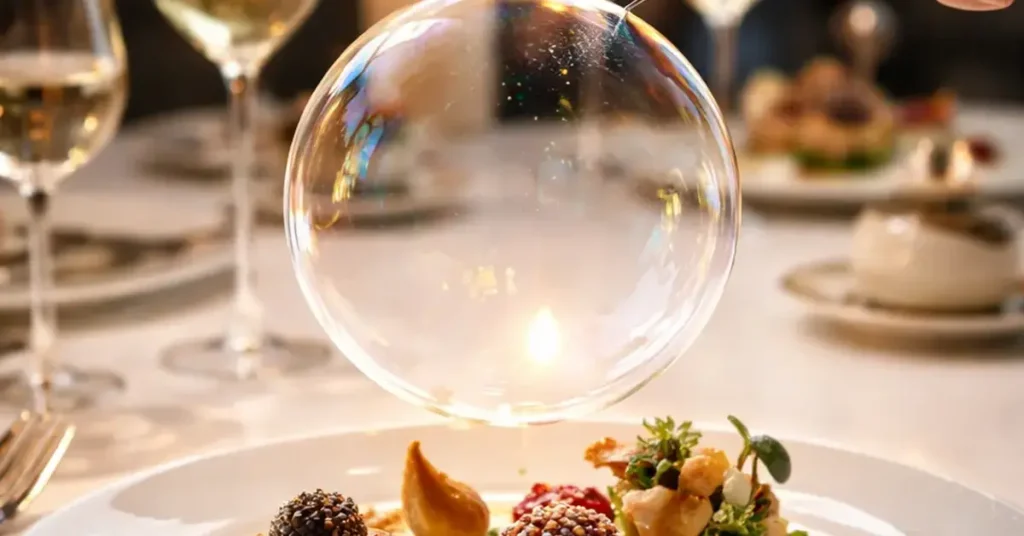
tasting menu bubble Key Takeaways
The tasting menu model — once the pinnacle of culinary ambition — is showing clear signs of strain.
- The tasting menu bubble is driven by rising ingredient costs, labor shortages, and a proliferation of copycat concepts in major cities.
- Diners are increasingly questioning the value proposition of $300+ meals that can feel formulaic, leading to softening reservations at top-tier restaurants.
- Forward-looking chefs are pivoting toward à la carte formats, shorter menus, and more accessible price points to reconnect with wary patrons.

What Is the tasting menu bubble and Why Are People Talking About It?
The phrase “bubble” gets thrown around a lot in finance and tech, but in the culinary world it has real meaning. Over the past decade, the tasting menu — a fixed sequence of small, artfully plated courses — became the gold standard for fine dining oversaturation. Restaurants from New York to Copenhagen built entire reputations on multi-course journeys that could last three hours and cost as much as a monthly car payment.
But lately, the chatter has shifted. Industry insiders, food writers, and even chefs themselves are asking whether we’re witnessing the peak of this trend. Reservations at some high-profile tasting-menu-only restaurants have become easier to snag. Online forums are filling with tasting menu criticism. And a growing number of acclaimed kitchens are quietly dropping the format or adding à la carte options for the first time. For a related guide, see KL’s Best Tasting Menu Under RM500 – Expert Roundup with Price-Performance.
The Price Ceiling Problem: When Is a Meal Too Expensive?
A single diner at a top-end tasting menu restaurant can now expect to pay $250 to $500 per person, excluding beverages, tax, and tip. Add wine pairings, and the bill easily crosses $700. For a couple, that’s a $1,400 night out — well beyond what most households consider reasonable, even for a special occasion.
Data from restaurant reservation platforms shows that average per-person spending at tasting-menu-only restaurants rose roughly 40% between 2019 and 2024, far outpacing general inflation and wage growth. Meanwhile, the median household income in the U.S. grew only about 15% over the same period. The math simply does not work for a broad base of diners.
“The tasting menu bubble is a price-driven phenomenon,” says David Chang in a recent interview with Eater. “When the cost of a single dinner equals a weekend getaway, you start to ask hard questions about what you’re actually paying for.” That sentiment is echoed by critics who argue that many tasting menus rely on expensive ingredients — truffles, caviar, wagyu — to justify the price tag rather than genuine culinary innovation.
The Hidden Cost of Keeping Up
For restaurateurs, the pressure to maintain a certain level of luxury has created a dangerous feedback loop. To stay relevant, kitchens must source rare ingredients, employ large brigade-style teams, and invest in custom tableware. All of these costs get passed to the customer. But when every competing restaurant does the same thing, the differentiating factors shrink, and diners become jaded.
Signs of fine dining oversaturation in Major Markets
New York City alone now has more than 60 restaurants offering tasting menus at $200 or more per person. London, Paris, and Tokyo show similar density. The problem is not the quality — it’s the sameness. A mushroom consommé followed by a course of sea urchin, followed by a squab dish with seasonal vegetables: the scripts feel interchangeable from one kitchen to the next.
Several high-profile closures in 2023 and 2024 have fueled the narrative. Manhattan’s Nix, a celebrated vegetable-focused tasting menu spot, shuttered after four years. Chef’s Table at Brooklyn Fare, a three-Michelin-star institution, faced a sudden drop in booking demand before pivoting to a shorter, less expensive menu. These are not isolated events — they are canaries in the coal mine.
Fine dining oversaturation is also noticeable in the secondary market. Cities like Miami, Austin, and Denver have seen a wave of tasting-menu openings in the last five years. Many of them struggle to fill seats midweek, relying on weekend splurge diners and tourist traffic to stay afloat.
The Rise of Tasting Menu Criticism from Professional Critics
Food critics, once the format’s biggest champions, have grown more skeptical. Pete Wells of The New York Times wrote a widely shared review in 2024 describing a three-hour meal as “impressive but exhausting,” questioning whether the format serves the diner or the chef’s ego. Similarly, Saveur published a feature titled “The Tasting Menu Has Lost Its Way,” arguing that the rigid structure stifles spontaneity and personal connection to the food.
This wave of tasting menu criticism is not just about taste — it’s about value. Critics point out that many diners leave feeling hungry or unsatisfied because portion sizes are tiny, and pacing can be uneven. The theatricality of the experience often overshadows the actual cooking.
Anecdotal Evidence That the Bubble Is Leaking
Beyond data and critical reviews, anecdotal signs are piling up. Reservation bots that once scalped tasting menu seats at a premium are now offloading tickets at below face value on secondary markets like Resy’s sold-out feed. Private dining rooms that were booked months in advance are available with a week’s notice. Even at iconic spots like Eleven Madison Park, last-minute cancellations are increasingly common. For a related guide, see Value Reflection: Is Your Luxury Dining Bill Justified? 5 Key Checks.
One chef in San Francisco told this publication that two of his peers have already switched their flagship tasting menu concepts to à la carte operations in the past year. “They were tired of the churn — the same guests coming once and never returning because the ticket was too high,” he said on condition of anonymity. For a related guide, see Same Chef, Two Concepts: 5 Key Differences Between Tasting Menu and Bistro.
Social media sentiment is also shifting. TikTok and Instagram food content now frequently features posts with captions like “Tasting menu regret” and “Overpriced tiny portion” racking up millions of views. The cultural cachet of the tasting menu is eroding, replaced by a preference for “community dining” — large-format dishes, shared plates, and more interactive experiences.
Forward-Looking Speculation: What Comes Next?
If the tasting menu bubble does burst, it will not mean the end of tasting menus altogether. Rather, we’re likely to see a correction toward more flexible, value-conscious formats. Some innovative chefs are already experimenting:
- Shorter menus: Five to seven courses instead of twelve to twenty, reducing both time and cost.
- Hybrid models: A la carte options alongside a tasting menu, letting diners choose their adventure.
- Lower price points: Menus under $150 that still showcase technique but skip the gimmicky luxuries.
- Experience-driven dining: More emphasis on storytelling, chef interaction, and unique settings rather than just ingredient showcasing.
The Michelin inspectors, notoriously slow to change, have begun awarding stars to more casual formats. In 2024, the guide gave a star to a noodle bar in Tokyo and a small-plates restaurant in Paris — signaling that the definition of excellence is expanding. The days of the tasting menu being the only path to critical acclaim appear numbered.
As one veteran industry consultant put it: “The tasting menu bubble will deflate, not explode. Restaurants that adapt will thrive; those that double down on $500 fixed menus without evolving the value proposition will struggle.”
Final Recommendations for Diners and Chefs
For diners, this moment offers a rare opportunity: you can still enjoy world-class tasting menus at competitive prices as restaurants become more willing to negotiate deals and offer shorter formats. Book midweek, look for restaurants that offer a la carte sections, and don’t be afraid to ask about abbreviated menus.
For chefs and restaurateurs, the message is clear: innovation and value must go hand in hand. Focus on unique experiences, not just a list of expensive ingredients. Consider adding a bar-only menu or a weekend brunch with smaller tasting plates to broaden your audience. And above all, listen to what diners are saying — they want to be wowed, not just fed.
Useful Resources
Read more about the evolving debate over tasting menus and fine dining economics:
- Eater: The Business of Fine Dining — Regular coverage of restaurant closures, pricing trends, and chef interviews.
- Saveur: The Tasting Menu Debate — Features and opinion pieces on the future of culinary formats.
Frequently Asked Questions About tasting menu bubble
What is the tasting menu bubble ?
It refers to the rapid rise and potential overvaluation of high-cost, multi-course tasting menus in fine dining. Critics argue that prices have outstripped value, leading to diner fatigue and a market correction.
Is the tasting menu bubble going to burst?
Many industry experts believe it is already deflating. Evidence includes easier reservations, restaurant closures, and a shift toward more accessible dining formats.
Why are tasting menus so expensive?
Costs include rare ingredients, large kitchen teams, custom tableware, and the labor-intensive plating required for multiple small courses. Overhead in top-tier restaurants is significantly higher than in traditional dining.
How much does a typical tasting menu cost?
In major cities, expect $200 to $500 per person for food alone. With wine pairings, tax, and tip, the total often exceeds $700 per diner.
Are tasting menus worth the money?
Value is subjective. Some diners find the artistry and experience unforgettable; others feel the cost is disproportionate to the amount of food and enjoyability. The tasting menu bubble debate centers on this exact question.
What is fine dining oversaturation ?
It describes the phenomenon where too many restaurants offer similar high-end tasting menu experiences in the same city, leading to reduced differentiation and declining demand for any single venue.
What are the main criticisms of tasting menus?
Common tasting menu criticism includes small portions, long dining times, lack of flexibility, high cost relative to quantity, and a sense of sameness across different restaurants.
Are any famous restaurants dropping tasting menus?
Yes. Several high-profile spots like Chef’s Table at Brooklyn Fare have shortened or diversified their menus. Others, like Nix in New York, closed entirely. More are expected to follow.
Will Michelin stars still be awarded to tasting menu restaurants?
Michelin is already recognizing more casual formats. While tasting menus remain a path to stars, the guide’s criteria are becoming more inclusive, reducing the format’s exclusive hold on recognition.
What alternatives to tasting menus are emerging?
Shorter fixed menus (5–7 courses), hybrid à la carte and tasting options, community dining with shareable plates, and chef’s counter experiences are growing in popularity.
Why do some chefs prefer tasting menus?
Tasting menus give chefs complete creative control, allow them to showcase a broader range of techniques, and control the pacing and narrative of the meal. Many chefs find it artistically fulfilling.
How do diners feel about tasting menus in 2025?
Sentiment is mixed. There is growing fatigue among frequent diners, but occasional celebratory diners still enjoy the special-occasion aspect. The tasting menu bubble is largely about this split in perception.
What is the average length of a tasting menu dinner?
Most tastings range from 2.5 to 4 hours for 10 to 20 courses. Some can stretch longer with wine pairings and intermezzo pauses.
Are tasting menus becoming shorter?
Yes. A growing number of restaurants are offering 5- to 7-course options to reduce time commitment and cost, appealing to diners who want the experience without the all-evening affair.
Do tasting menus always include wine pairings?
Not always. Many restaurants offer optional pairings, but some include them in the base price. Diners can often request a non-alcoholic pairing or skip it entirely.
Can I get a tasting menu without a reservation?
In most high-end restaurants, reservations are essential — often booked weeks or months in advance. However, as the tasting menu bubble deflates, last-minute availability is increasing.
What cities are most affected by fine dining oversaturation ?
New York, London, Paris, Tokyo, and San Francisco lead the list. Secondary markets like Miami, Austin, and Denver are also seeing excess supply.
Are there any tasting menu restaurants that are thriving?
Yes. Those that offer genuine innovation, shorter menus, lower price points, or unique concepts — like experiential dining or hyper-local ingredients — continue to perform well. The key is differentiation.
What advice do experts give to diners in 2025?
Look for restaurants that offer shorter or hybrid menus, book midweek for better availability and possibly lower prices, and be willing to try new formats like chef’s counters or community tables.
Where can I read more about tasting menu trends?
Follow industry publications like Eater and Saveur, and check the Useful Resources section above for direct links to ongoing coverage and analysis.